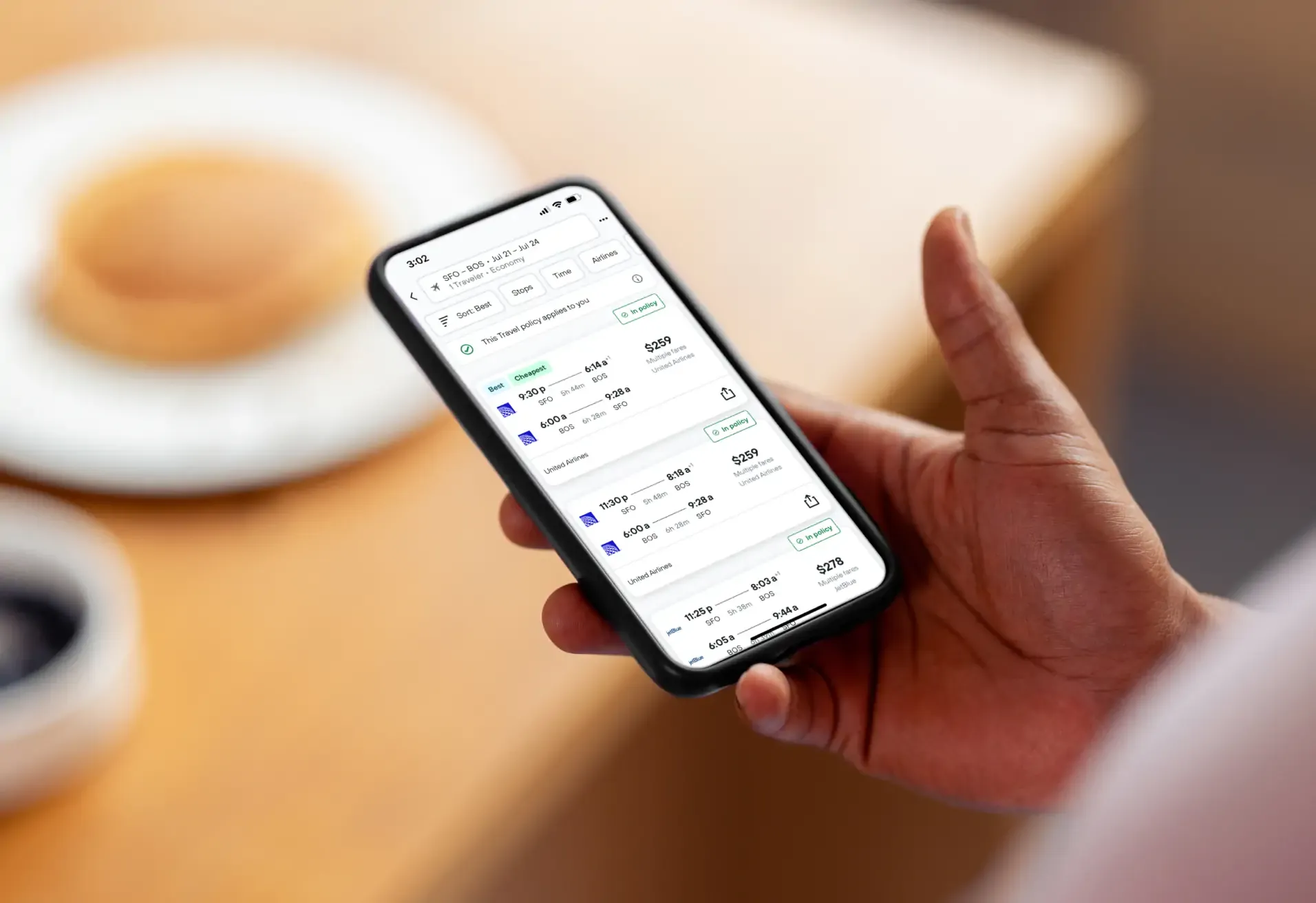

For many businesses, especially SMBs that are growing quickly, last-minute travel is simply part of the job, whether it’s pursuing an unexpected sales opportunity, adapting to a client meeting that suddenly moves forward, or sending a team member on-site immediately to address an urgent problem.
Agility is a competitive advantage, but when travel plans come together at the last minute, costs can quickly spiral. Flights are more expensive, hotels have limited availability, and without the right systems in place, teams often book whatever they can find first.
The good news: last-minute travel doesn’t have to mean last-minute prices. With smarter habits and the right tools, companies can stay flexible without losing control of their travel budgets.
That’s exactly where platforms like KAYAK for Business come in.
Book a demo here.
The reality of last-minute business travel
Even companies with carefully structured travel strategies still encounter unexpected trips, as schedules shift, conferences open the door to additional meetings, and operational challenges occasionally require a team member to be on-site at short notice.
For SMBs in particular, the challenge isn’t just the travel itself, it’s managing it efficiently. Without a centralized system, last-minute bookings often happen through multiple channels: airline sites, hotel apps, personal reward accounts, or consumer booking platforms.
This fragmentation creates several problems:
- Limited visibility into total travel spend
- Missed opportunities to compare prices effectively
- Difficulty enforcing company travel policies
- No centralized reporting for finance teams
When everyone books independently under time pressure, even experienced travelers tend to prioritize speed over cost optimization.
A centralized platform like KAYAK for Business helps organizations solve this challenge by bringing bookings, policies, and spend tracking into one place, even when trips are booked at the last minute.
Why agility and cost control should go together
Corporate travel today is increasingly about responsiveness, as teams need to move quickly while maintaining financial discipline.
Modern travel programs are increasingly designed to adapt to changing conditions while maintaining structure and oversight, a shift explored in this article on agile corporate travel systems.
The key is balancing two priorities that often seem in conflict:
- Speed: Employees need to book quickly when opportunities arise.
- Control: Finance and operations teams need visibility into spend.
Without the right tools, companies usually sacrifice one for the other. Either bookings become slow and bureaucratic, or spending becomes difficult to manage.
A well-designed travel platform eliminates that tradeoff.
Smarter habits for last-minute travel
Technology helps, but good travel practices also play a role. Businesses that manage last-minute trips well tend to follow a few consistent habits.
1. Centralize bookings
When every booking happens inside a single platform, teams can compare multiple travel options quickly while leadership maintains oversight.
Using KAYAK for Business ensures that employees can search hundreds of travel sites in seconds without leaving the company’s travel ecosystem.
This means faster booking decisions and better price comparisons, even under tight timelines.
2. Set clear travel policies
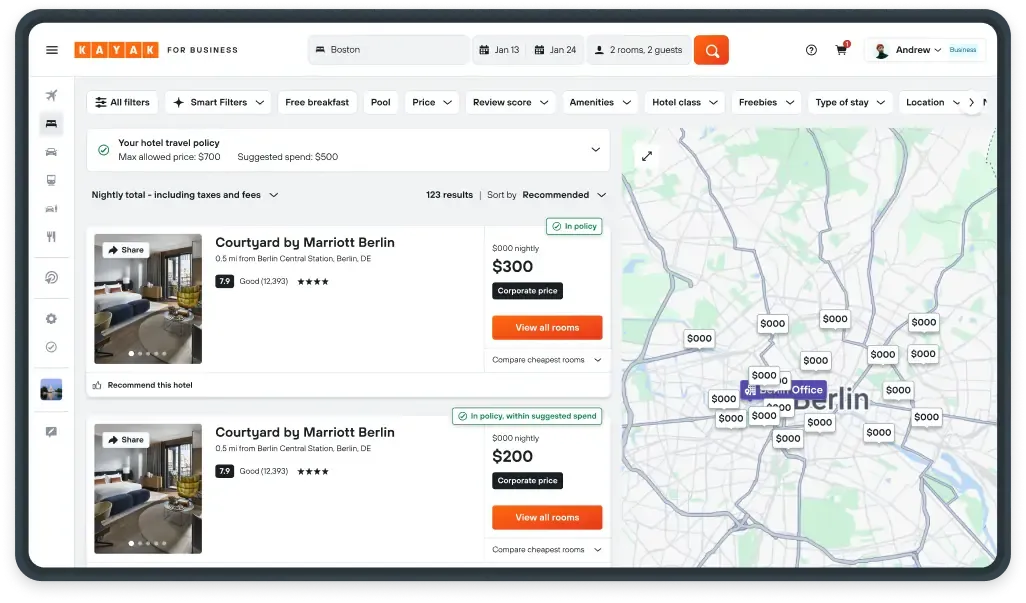
Last-minute bookings often bypass travel policies simply because employees don’t have time to check guidelines.
Embedding those policies directly into the booking process helps prevent unnecessary overspending. Instead of relying on manual approvals, travelers automatically see options that fit within company rules.
This type of built-in structure becomes particularly valuable for organizations managing event travel or large group trips, where coordination matters as much as price. Planning tools and centralized oversight – like those discussed in this guide to managing business event travel – can help companies stay organized even when schedules change quickly.
3. Keep visibility over spend
One of the biggest risks of last-minute travel is losing track of total spend.
Finance teams need clear reporting to understand where money is going, which teams travel most frequently, and where cost efficiencies can be found.
By consolidating travel bookings and reporting through KAYAK for Business, companies gain real-time visibility into travel activity without chasing receipts or manually compiling reports.
This visibility becomes essential as companies scale their travel programs.
4. Move faster without losing flexibility
Ironically, the more organized a travel system is, the faster employees can actually book trips.
Instead of jumping between websites and apps, travelers can search flights, hotels, and rental cars in one place. The platform handles comparisons automatically, helping travelers make confident decisions quickly.
The broader future of travel management is increasingly built around this principle: combining automation, centralized data, and flexible booking tools so companies can move quickly without losing financial control.
For organizations that travel frequently, this shift can dramatically reduce both booking time and costs.
Turning last-minute travel into a strategic advantage
The reality is that last-minute travel will never disappear from business operations, as markets move too quickly, and opportunities rarely follow predictable schedules.
But companies that treat travel management strategically gain a significant advantage. Instead of scrambling every time a trip appears on the calendar, they rely on systems that support fast decision-making while protecting the budget.
With KAYAK for Business, organizations can:
- Centralize travel bookings across teams
- Maintain visibility into company-wide travel spend
- Enforce policies automatically
- Simplify reporting and reconciliation
- Help employees find better options quickly
This combination allows companies to stay agile without turning every urgent trip into a budget surprise.
Stay flexible without blowing the budget
In today’s business environment, agility matters more than ever. Opportunities appear quickly, and the companies that respond fastest often win.
But agility doesn’t have to come at the expense of financial discipline.
With the right travel tools and smarter booking habits, even last-minute trips can remain cost-efficient, organized, and easy to manage.
If your team frequently books travel on short notice, it may be time to rethink how those trips are managed.
👉 Explore how KAYAK for Business helps companies simplify travel management.
👉 Or book a demo to see how your organization can stay flexible without overspending.