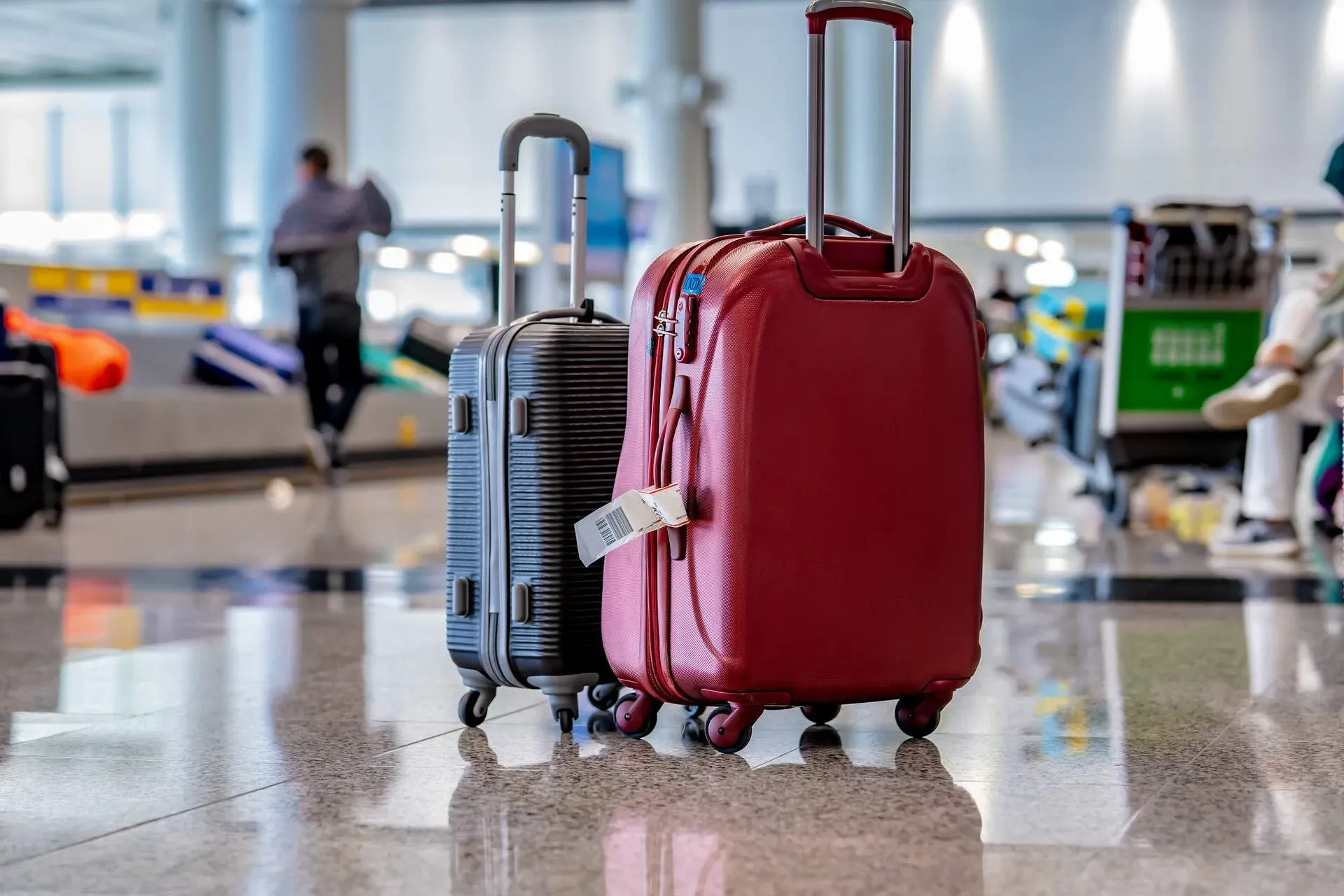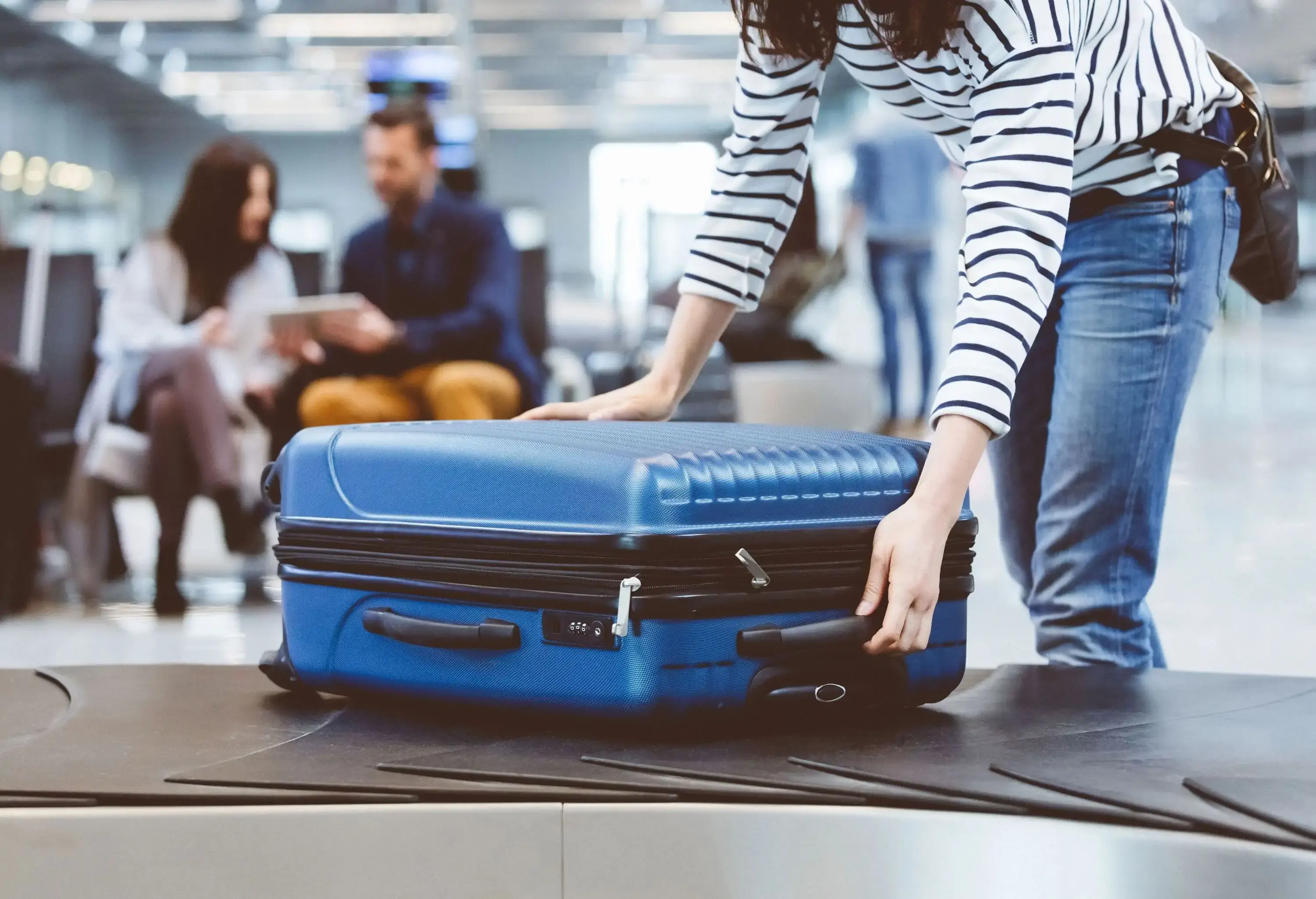

Few travel moments kill the mood faster than realizing your luggage didn’t arrive with you. Thankfully, lost bags are still relatively rare – more than 99% of checked luggage makes it to its destination on time. But when bags do go missing, knowing what to do next can save time, stress and money.
Here’s what to know about lost luggage, from how often airlines lose bags to how to claim compensation if yours disappears.

Quick summary.
- According to IATA, 99.57% of checked bags arrive on time. Most delayed luggage is returned to travelers within 48 hours.
- If your bag goes missing, file a Property Irregularity Report (PIR) immediately before leaving the airport — it’s essential for tracking and compensation claims.
- Airlines typically reimburse travelers for reasonable essentials like toiletries and basic clothing while bags are delayed, but coverage varies by carrier.
- Travelers may be entitled to compensation for delayed, damaged or lost luggage, with different liability limits for domestic and international flights.
In this article
- What to do if your luggage is missing or lost.
- Delayed baggage policies for major US airlines.
- Compensation for lost luggage.
- Lost luggage claim deadlines: how long do you have?
- What’s the best way to stop luggage getting lost.
- Why do airlines lose luggage?
- How often does luggage get lost?
- Lost luggage: your questions answered.
What to do if your luggage is missing or lost.
The first and most important step is to not panic! It’s easy to get overwhelmed by the thought of not seeing your belongings again. It’s even easier to immediately assume your entire trip is ruined.
Most luggage is found and returned to its owners within 48 hours. If it isn’t found within five days, most airlines then consider the bag lost for good.
When my bags didn’t arrive with me for a week-long trip to the Seychelles I got them back only in time for the flight home! I spent the entire week in a $5 Hawai’ian shirt and boardshorts, much to the amusement of my friends and confusion of my fellow Raffles Seychelles guests.
If only I’d known my rights to lost luggage reimbursement and compensation rights at the time.
Here’s a simple five-step plan to deal with your lost or missing luggage.
1. Search the baggage hall thoroughly.
On a recent plane to train transit through Frankfurt Airport, my bag didn’t materialize on the designated carousel. I waited for several hours, begged (and argued) with the ground crew and was told they had no idea where it was but it would “turn up eventually.”
At the end of my tether, I went exploring only to find my bag looping eternally around a carousel far from the one it was allocated to.
Although I was happy to get it back, I received zero compensation for my missed train ticket across Germany. The moral of the story is to conduct a search yourself before asking for help.
Check every available carousel. Search those random mountains of unclaimed bags that seem to accumulate in every baggage hall. Leave no dark corner unchecked. Only once you’re sure it’s not there should you report it as lost.
2. File a missing or lost luggage report.
Once you’re sure your bags aren’t coming, report them as missing right away. This document is called a Property Irregularity Report (PIR) — the official airline form that logs your missing bag and generates a unique reference number (typically 10 characters) you’ll need for every follow-up claim and reimbursement request.
Most airlines have dedicated baggage claim or lost luggage desks directly in the baggage hall. Filing a report and checking all the necessary boxes is vital if you’re going to track down your missing luggage.
If you’ve transferred between airlines, you need to speak to the carrier from your last flight. The more detailed the information you can provide, the better. Color, size, brand, easy-to-identify features and of course your luggage tag from check-in will speed up the process. If you have photos of your luggage, share them.
Some airlines also now have bag tracker apps, so they may be able to help right away. Make sure to include your contact details, both at home and where you’re staying while away.
Equally important, don’t leave without a phone number for the lost luggage desk, the name of the person you spoke to and a case reference or tracking number. I always take photos of any forms as an easy backup should I need them.
3. Know your lost baggage compensation rights.
Not all airlines are created equal and as such, not all compensation policies cover the same things. Ask exactly what the airline you’re dealing with is willing to offer in compensation and how it might reimburse you.
There are legal requirements in play and you have rights as a passenger, although these vary by country. In my experience, this is often an “if you don’t ask, you don’t get” scenario. Some carriers are ready prepared with things like amenity kits or even child car seats if yours has gone AWOL.
This will depend on what’s lost, whether you’re returning home or are overseas, and what the timescale is. In all cases you’ll need to have filed a reimbursement claim within an allocated period that varies between airlines.
4. Stay in constant contact.
Don’t be afraid to hassle and hustle the airline to find your bags. In my experience, the more visible (annoying!) you are, the more likely they’ll be to try and resolve the case quickly.
If and when your bag is found, make them deliver it to you wherever you are. It’s the airline’s responsibility after all, and they should cover any costs involved. This should work no matter if you’re back home, staying nearby or even if you’re flying on to another destination.
5. Shop for essentials and keep your receipts
The waiting game can be stressful, but it doesn’t mean you have to suffer without the things you need. Most airlines will cover your reasonable expenses for any essentials you may need. Check their policies and if in doubt, ask at the lost baggage desk what’s covered.
This doesn’t give you carte blanche to go wild with a new wardrobe and lavish dinners out. It does mean you can pick up toiletries, medication and even a basic change of clothes. In all cases, keep your original receipts for everything you intend to claim.
It’s also worth checking whether your credit card includes lost or delayed baggage coverage — many premium travel cards do, and you can file a separate claim with your card issuer to cover gaps the airline won’t pay.
Similarly, if you purchased travel insurance, file a claim with your insurer: travel insurance typically covers replacement value rather than the depreciated value airlines use, which can make a meaningful difference for expensive items.
Delayed baggage policies for major US airlines.
Every airline handles delayed baggage claims a little differently. Most major US carriers will reimburse travelers for essential purchases while they wait for their bags to arrive, but what’s covered – and how much you can claim – varies quite a bit.
Here’s a quick look at the delayed baggage policies for some major US airlines before your bag is officially considered lost:
Compensation for lost luggage.
All airlines have lost baggage compensation policies in place. These are defined by the airlines themselves and can vary according to your frequent flyer status, the tickets you’ve bought and the route you’re flying.
On a domestic U.S. flight, the maximum airline liability for lost baggage is $4,700 per passenger under DOT regulations. On an international flight governed by the Montreal Convention, the liability cap is approximately $2,175 (1,519 Special Drawing Rights) – and depreciation of your items’ value will apply in both cases.
What airlines typically won’t cover:
- Jewelry and watches
- Electronics (laptops, cameras, phones)
- Cash and gift cards
- Fragile items
- Perishables
Keep these items in your carry-on, and consider a travel insurance policy or homeowner’s/renter’s insurance for high-value belongings.
Baggage fee refund.
If the airline officially declares your bag lost, you’re entitled to a full refund of any checked baggage fees you paid for that bag under DOT regulations. Request this explicitly when filing your claim – it won’t always be offered automatically.
In the US, DOT regulations for domestic travel and treaties for international travel mean airlines are required to compensate passengers if their bags are damaged, delayed, or lost. In the EU, baggage rights are generally governed by the Montreal Convention.
A great organization to lean on is IATA, the trade association for the world’s airlines. Representing over 360 airlines and over 80% of global air traffic, it helps formulate industry policy on critical aviation issues.
The difference between delayed, lost and damaged baggage compensation.
Delayed baggage means your bags didn’t arrive at their expected destination on time but are eventually returned to you. In this case, you can claim compensation for necessary expenses while you’re waiting to be reunited with it.
Lost baggage means the airline couldn’t find your baggage after a reasonable period — typically five to 14 days for US domestic flights, though the Montreal Convention sets a 21-day standard for international travel.
Once a bag is officially declared lost (rather than delayed), you’re entitled to compensation for the full value of lost items up to the airline’s liability cap, rather than just interim expense reimbursement.
Damaged baggage means your bags arrived (late or not) but with new, visible damage to them. This could be broken locks, zips, handles or wheels. This means you can claim compensation for repairs or a complete replacement depending on the extent of the damage.
In all these cases, the airlines will have their own definitions of what delayed, lost and damaged means, so it’s important to check with the airline what you can claim. It’s also always worth taking out your own insurance to cover any claims.
Lost luggage claim deadlines: how long do you have?
- Immediately (at airport): File a Property Irregularity Report (PIR) at the airline’s baggage desk before leaving the airport. Note your reference number and the agent’s name.
- Within 7 days: Report damaged baggage to the airline in writing within 7 days of receipt under the Montreal Convention.
- Within 21 days: Report delayed baggage to the airline in writing within 21 days of the date your bag was returned to you under the Montreal Convention.
- Within 30 days: (varies by airline) Most US airlines require you to file a formal lost baggage claim within 30 days of the incident, though this window varies by carrier. Note: Southwest Airlines requires domestic delayed baggage to be reported within 4 hours of flight arrival — one of the strictest windows among major US carriers.
- Within 2 years: The Montreal Convention sets a 2-year deadline from the date of arrival (or the date the aircraft was scheduled to arrive) to take legal action against an airline for lost, damaged, or delayed baggage.
What’s the best way to stop luggage getting lost.
The best way to deal with lost luggage is to do your utmost to stop it getting lost in the first place. There are some simple precautions you can take to help make that happen. Here are my golden rules.
Take carry-on baggage.
If your bags are always with you, the airlines can’t lose them. Simple and effective.
Use tracking tags.
While old-school baggage tags can still be effective, I’ve always hated putting my personal details on show. Modern tracker devices like Apple’s AirTag or Tile are a simple, effective way to monitor exactly where your bag is.
If your bag goes missing, share the tracker’s live location with the airline agent when filing your PIR — this real-time data can significantly accelerate recovery. Some airlines, including United, have integrated Apple’s “share item location” feature directly into their apps, though tracker data supplements rather than replaces the formal PIR filing.
Put your contact information in your bag.
If the worst does happen, having your contact information clearly visible inside your bag will help airlines contact you. Go the extra mile and add your travel itinerary – it may help them get it back to you faster.
Fly direct.
It’s not always possible, but eliminating the major cause of lost luggage is a great way to reduce the chances of it getting lost. That means no connections and no luggage transfers.
Remove old travel tags and stickers.
If you’re anything like me, your bags are covered in old travel tags and airline barcode stickers from previous flights. Removing them reduces confusion over which flight your bags should be on, lessening the chance of a wrong rerouting.
Why do airlines lose luggage?
The reasons for delayed and lost luggage are manifold. While all airlines and airports use incredibly high-tech logistical and tracking solutions, nothing is foolproof. The most common causes include:
Tight layovers.
By far the most common reason for lost luggage is tight connections between transfers. Unloading, processing and transferring the right bags to the right connecting planes is incredibly complex.
Doing it under serious time pressure only increases the likelihood of mistakes being made. When bags are delayed in transit, they may be left at the airport to make sure they don’t delay the next flight.
Misrouting and rerouting.
A natural consequence of tight layovers (though not the only reason behind it) is bags getting misrouted to wrong destinations. You fly from NYC to London, but your bag instead flies to Amsterdam – not ideal. Misrouting isn’t always accidental though.
Unexpected factors like adverse weather may force airlines to change destinations at short notice.
Human error.
With so many bags going to and from so many places, mistakes are inevitable. That can happen at any stage of the travel process, from ticketing to security, enplaning to carousel allocation.
System failures.
Many major airports and airlines have made global headlines when technical problems have ground baggage transfer and allocation to a halt. This can result in catastrophic numbers of delayed and lost bags, which only makes it harder to sort and identify them quickly and efficiently.
Predefined restrictions.
Should bags be too big or too heavy, or a plane become overloaded, they may be delayed to later flights.
How often does luggage get lost?
According to the International Air Transport Association (IATA), more than four billion bags are carried by airlines globally each year. Of these 99.57% arrive on time. Despite that impressive statistic, it still means many passengers arrive without their luggage.
On domestic flights in the US, passengers report millions of pieces of checked luggage as lost, damaged, delayed or stolen each year.
According to the US Bureau of Transportation Statistics, even the worst offending US airlines mishandle fewer than one of every 100 checked bags. These numbers are undoubtedly staggering and perhaps shine a light on why some bags inevitably get lost.
Airlines with the lowest mishandled baggage rates in the U.S.
According to the latest U.S. Department of Transportation Air Travel Consumer Report, these airlines had the lowest rates of mishandled checked baggage in the most recent reporting period.
| Airline | Mishandled bags per 100 checked bags |
|---|---|
| Allegiant Air | 0.11 |
| JetBlue Airways | 0.30 |
| Southwest Airlines | 0.33 |
| Delta Air Lines | 0.35 |
| Spirit Airlines | 0.39 |
| Frontier Airlines | 0.40 |
| Alaska Airlines | 0.46 |
| American Airlines | 0.55 |
| Hawaiian Airlines | 0.55 |
| United Airlines | 0.57 |
Source: U.S. Department of Transportation Air Travel Consumer Report (monthly marketing carrier ranking, most recent available data).
Lost luggage: your questions answered.
If an airline loses your luggage, it will typically declare the bag officially lost after five to 14 days (or 21 days for international flights under the Montreal Convention). Once declared lost, you’re entitled to compensation for the value of your lost items up to the airline’s liability cap — not just reimbursement for interim expenses.
On a domestic U.S. flight, the maximum airline liability for lost baggage is $4,700 per passenger under DOT regulations. On an international flight governed by the Montreal Convention, the liability cap is approximately $2,175 (1,519 Special Drawing Rights) — and depreciation of your items’ value will apply in both cases.
If an airline refuses to pay your lost luggage claim, you can file a complaint with the US Department of Transportation (DOT) or take the airline to small claims court. Under the Montreal Convention, you have up to two years from the date of arrival to pursue legal action against the airline for lost, damaged, or delayed baggage.