

With so many things to take into account, renting a car can feel like a shot in the dark. What’s included and what’s worth paying extra for? Am I fully insured? Are the rules the same for all rental companies? Here are the answers to those questions so you can rent a car confidently.
What should I check before booking a rental car?
There are five things you absolutely need to know before you book your rental car. This is where most rental surprises come from, but they’re all knowable before you book:
- The total rental price
- The fuel and mileage policy
- What insurance is included
- The deposit, and what card you’ll need to pay it
- The cancellation terms
KAYAK assembles data on each of these and weighs them up to create a car offer score for every rental. This helps clarify things that commonly catch drivers out, creating a quick, clear overview of what you need to know before you book.
Rental deals with fairer fuel policies, unlimited mileage, flexible cancellation policies, low deposits, and that include insurance for things beyond the very minimum, like tires and glass, will score higher. Checking this score before you book is the fastest way to spot a restrictive policy hiding behind a great price.
You’ll find the car offer score in the info panel of each rental deal on the search results page. Just enter the car rental details on KAYAK and hit Search. Each result will have a car offer score that you can select to see an individual score for each element.
What does the price displayed on KAYAK include?
The price you see on KAYAK is the total price for the rental itself, including taxes and fees. Select the More information box and you’ll get a breakdown of what’s behind that price, including fuel policy, mileage, protection, and payment and cancellation terms.
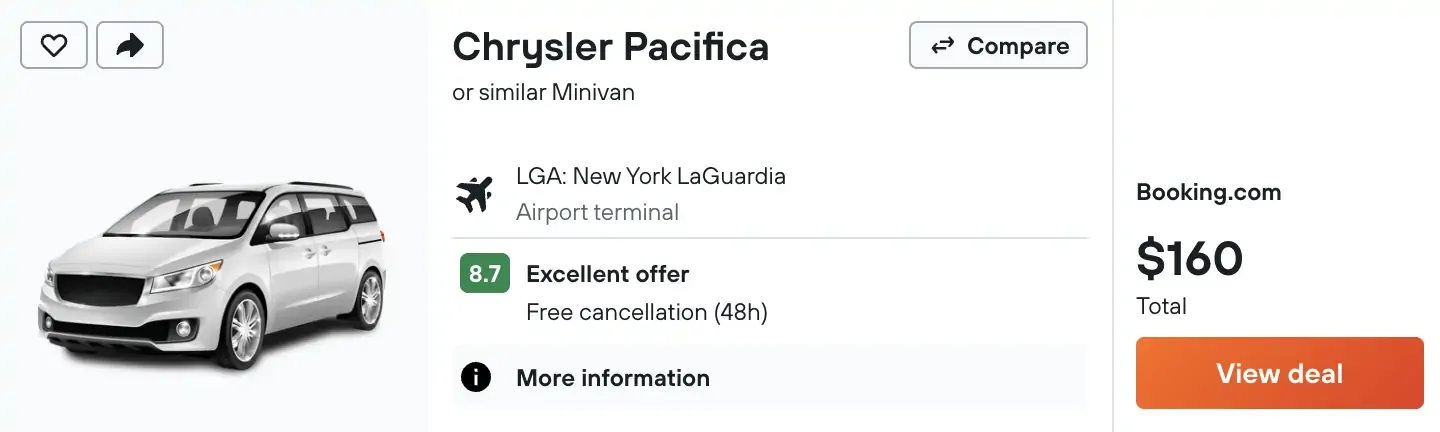
These criteria can differ drastically between deals. I always double check them before booking and use the filters to eliminate non-negotiable features like unlimited mileage and the fair fuel policy. That way I can compare like for like beyond the headline price.
In my experience, two factors can slip under the radar. Firstly, the payment policy. Some rental agencies will charge you more to pay at the counter than to pay upfront online.
Some will only offer free cancellation if you agree to pay more at the counter. Secondly, extras like adding a second driver or a child seat. These can be expensive and really mount up for longer rentals if you don’t factor them in advance.
Which payment methods can I use to rent a car?
Most rental companies ask for a credit card to secure the deposit against your rental. Several of the major brands also now accept debit cards, though usually with extra conditions and often at extra cost.
When booking with a credit card, make sure it’s in the main driver’s name and has a big enough balance to cover the cost of the deposit.
Some smaller rental companies also ask that the credit card be registered at the same address as the driving license you use, so check before booking. I recently found that out the hard way and had to pay charges that cost more than the original rental.
If you’re booking with a debit card, you’ll need to meet more conditions. Typically, these include:
- Booking at least 24 hours ahead of the rental date
- Using a Visa, Mastercard or Discover debit card
- The name on the card matching the driving license and reservation
- A minimum age of 25
- A second form of ID
These requirements vary by both company and location and you may find debit cards aren’t accepted for some premium cars. Even if you’ve prepaid online beforehand, always take your payment card with you, as some companies will want to see it at the counter.
How do deposits and authorization holds work?
The rental price is what you pay to drive the car. The deposit isn’t an extra charge but rather a temporary hold placed on your card for the duration of your rental – usually a few hundred dollars.
When you collect your rental car, the company will ask you to authorize them to block the deposit amount on your card. This means your available balance or credit will reduce by that amount.
Once you return the car untarnished, the company releases the hold on your card. Depending on your card issuer, this can take several business days to reappear on your balance.
Before you book, check the deposit amount and that you have the balance to cover it on your credit or debit card. And of course, when you return the car make sure the company signs off on its condition while you’re there. It doesn’t hurt to take photos too, just in case.
Can the rules vary by country, location and vehicle?
Absolutely, and often do. The same rental company can have different rules for different cars, branch locations and countries.
A classic example is airport versus city rental. Airport rentals can carry surcharges, yet are often still cheaper than their city-based rentals thanks to their vast fleets. They can also be more amenable to taking debit cards for deposits.
Debit card rules are stricter in some countries, and what’s included in the rental can vary too. In the UK and much of Europe, protection like collision damage waiver (CDW) is usually included in the base price.
In the US, it can cost anything from $10 to $40 extra a day, but I’d never rent without it. Premium cars often come with bigger deposits and credit-card only rules.
Where can I find the rental terms before booking?
On KAYAK, that More information button I mentioned earlier is your key to what’s included in that specific booking. Read it thoroughly before you go to book your rental.
Once you hit the KAYAK Book button, you’ll be redirected to the provider’s website to complete your booking. It’s their terms that govern your rental, so make sure they match what you’re expecting – everything from price to deposit to insurance. Look for a link saying something like rental terms.
Do I need to buy insurance from the car rental company?
That depends on what protection you already have and what’s included in the rental you’re booking. To make sure you have the right level of insurance, there are three aspects to think about:

What’s already included. Many rentals come with mandatory liability coverage and in some markets CDW or theft protection bundled in. Though these usually come with an excess to pay on any claim.

What cover you already have. Check to see if your personal car policy or existing travel insurance give you cover, though it’s not usually the case for rentals abroad. If you’re paying with a credit card, it may offer extra coverage.

Whether it’s worth buying extra protection. If you have no existing protection, the default excess is too high or you’re driving somewhere with added risk, it makes sense to take out appropriate cover. You can do this at the counter with the car rental company, but I would always recommend organizing third party coverage in advance – it’s cheaper and less stressful.
Rental car booking checklist.
The most important things to check before you commit to booking your rental car:
- Total price – and currency it’s charged in
- Payment method and requirements – debit or credit card
- Cardholder requirements – card in the main driver’s name, matching the license and reservation
- Deposit – how much is it, how long it takes to be repaid
- Collection documents – license, payment card, second ID, proof of purchase, onward travel proof (in some cases)
- Insurance and protection – what’s included and what’s the excess
- Cancellation terms – when is it free until
- Fuel and mileage policies – ideally full-to-full with unlimited mileage
- Pickup and returns – when are they open, where are they located
FAQs.
When you book a rental, you book by category rather than specific car model. The company guarantees your car will meet certain criteria for things like size, seats and transmission type. But the model may be different to the photo you see, hence the “or similar.”
On KAYAK, the total price you see includes taxes and fees for the rental car. You can pay for extras like a second driver and any location-specific charges directly to the rental provider.
Find your next rental car for less.