

Along with packing, keeping kiddos entertained on board, and about a million other must-dos that traveling with children demands, parents also have the crucial task of keeping track of kids’ travel documents.
Answering the question “what do kids need to fly?” depends largely on their age; the destination (domestic or international); and who they’re flying with. But as with so much else in travel, rules also vary. Here’s what to know about kids’ travel documents.

Kids travel documents for U.S. domestic flights.

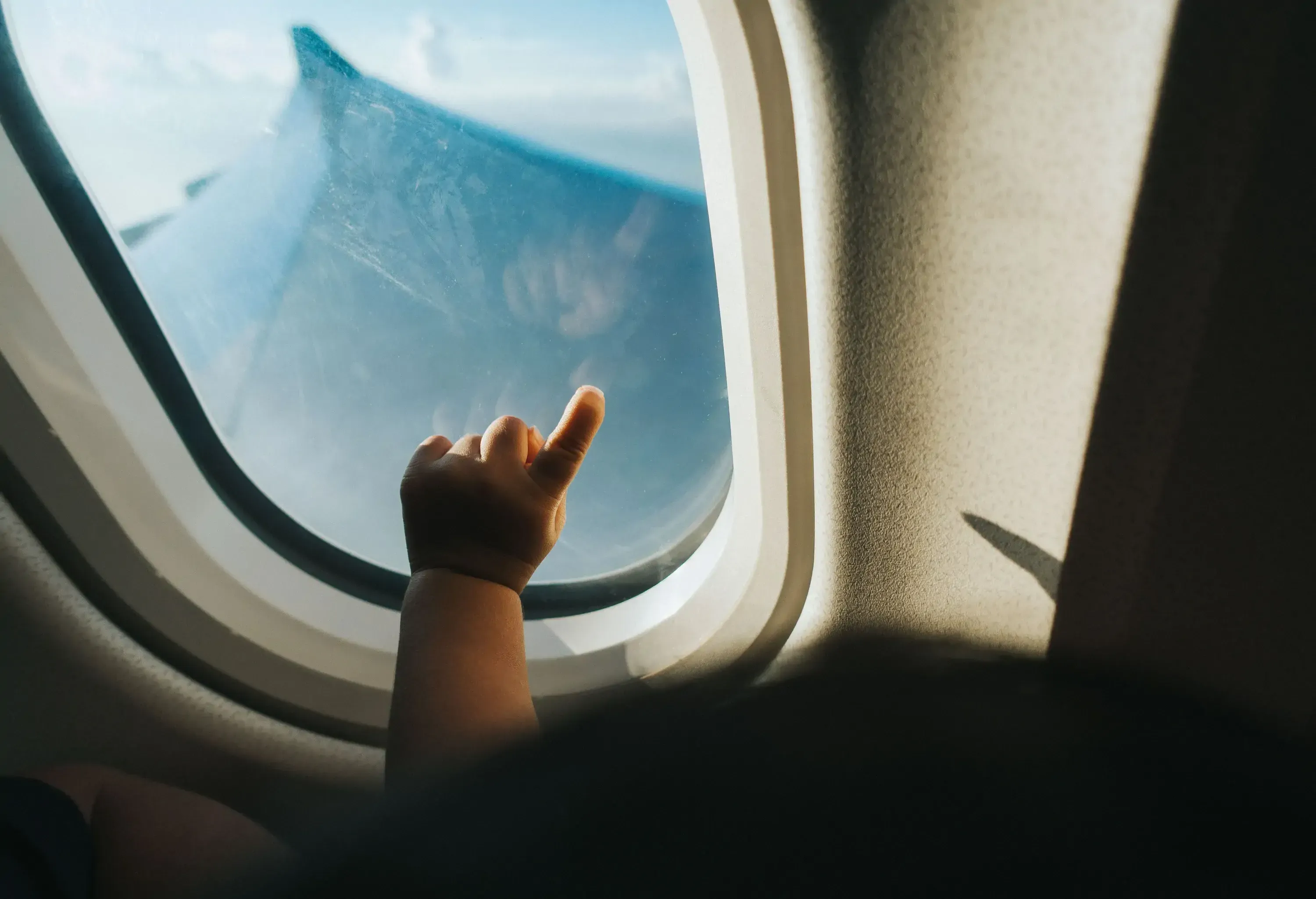
If you’re flying with kids under 18 years within the U.S. – both on the mainland and to Hawaii and Alaska – TSA rules do not not require them to have ID.
However, airlines will require proof of age, such as a birth certificate, for children under two years old who will sit on your lap (i.e., without a ticketed seat). So it’s strongly recommended to bring a certified copy – even if they look well under two.
Case in point: Once when I was flying Southwest with my infant son, then just nine months old, the check-in agent asked for proof of his age. I was caught unaware, without a copy of his birth certificate.
Luckily, time stamps from photos on my phone from the day he was born sufficed as proof that he was well under two. Back home, I snapped a photo of his birth certificate to avoid that stressful situation again. Lesson learned.
What documents do unaccompanied minors need?
Most major airlines offer an unaccompanied minor program, a fee-based program for young children flying alone. (It’s generally mandatory for kids between 5 and 14 years old and optional for older ages, though specifics vary by airline). It includes an airline escort to and from flights, with additional assistance onboard and other special services.
Required documents for unaccompanied minors
Be sure to confirm age requirements and other rules with your carrier in advance. Specifics vary per airline, but you’ll likely need:
- An unaccompanied minor form
- For international flights, any required Customs and Immigration documents for the day of departure, which must remain with your child throughout their journey.
- A birth certificate or passport as proof of age, provided by parents or guardians at check-in
- Proof of identification for parents or legal guardians who are authorized to pick up the child at the destination
International flights: What do kids need to travel?

All children, regardless of age, must have a valid passport to travel internationally. For U.S.-based travelers, a passport is required to visit countries beyond U.S. borders (and its territories, including Puerto Rico, the U.S. Virgin Islands, and Guam), as well as to re-enter the U.S.
A few key points regarding kids’ passports:
- U.S. passports for children up to 15 years old are only valid for five years. Starting at age 16, they are valid for 10 years.
- Many countries require passports to have six months’ validity for entry. Confirm entry requirements and double check passport expiration dates well in advance.
- Passport appointments for children require both parents to attend. In situations where one parent has custody, a notarized consent form can suffice. Be sure to check requirements of the U.S. Department of State.
Visas, entry forms, and other paperwork for kids.
In some countries, visas, entry forms, and other paperwork are required for children, just as they are for all foreign nationals. For example, the U.K. now requires an ETA form for all foreign travelers, regardless of age. Parents should check entry requirements in advance.
What do kids need to fly with only one parent?

If a child is traveling with only one parent, it’s highly recommended to bring a consent letter – signed by both parents, dated, and ideally notarized – indicating permission from the absent parent. A consent letter also can come in handy when children are traveling with caregivers like grandparents.
For international travel, this consent letter is essential, as border agents often request it if there’s only one parent present. My family lives in the Netherlands and travels frequently to the U.S., our homeland, so my husband and I always have our consent letter when only one of us is traveling with our son. And because my son and I have different last names, it’s even more important when it’s just he and I.
Preparation checklist for kids travel documents.
No matter the destination or duration of your trip, you’ll save plenty of time and stress by having your kids’ travel documents organized. These handy checklists will help keep the process smooth and stress-free.
Kids travel documents: Checklist for domestic trips
- Are you flying with a baby under two years old? You’ll need proof of age – a birth certificate or a certified copy – indicating they’re eligible to travel as a lap infant.
- Are you the only adult flying with your children? It’s smart to have a notarized consent form signed by both parents authorizing permission.
- Is your child traveling as an unaccompanied minor? Consult your airline’s specific regulations for required documents, like the child’s birth certificate and official ID for adult(s) authorized for pick-up.
- Is your child traveling with another caregiver? If your kiddo is flying with any non-parent caregiver, like grandparents, they should always carry a notarized parental consent form.
Kids travel documents: Checklist for international trips
All of the above apply, as well as the following:
- Does your child have a passport that’s valid for at least six months? Many countries require travelers’ passports, including children’s, to be valid for at least six months prior to entry. Check dates far in advance to avoid stress – and possibly having your trip cut short.
- Do you have all necessary entry visas or entry forms for your child? Just as they are for all travelers, this critical paperwork applies to kids, too.
- Do you have a parental consent form? This is one form you don’t want to be caught without if a stern border agent asks for it.
FAQs.
Kids under 18 traveling domestically do not need ID. However, if they’re lap infants flying without a ticketed seat, airline agents may request proof of age. So it’s always helpful to have a copy of a birth certificate, or, at the very least, a photo of one.
All children, including infants, need a passport that’s valid for at least six months, plus any required entry paperwork. Some countries require a parental consent letter if only one parent is traveling. Some airlines also may have extra paperwork for minors.
In these cases, it’s highly recommended to have a notarized consent form indicating permission from the absent parent. This is a must-have for international travel, especially if the parent and child have different last names. This form also can come in handy when a child is traveling with another adult or caregiver, such as a grandparent.
Most airlines require proof of age, such as a birth certificate, for children flying with an unaccompanied minor program.