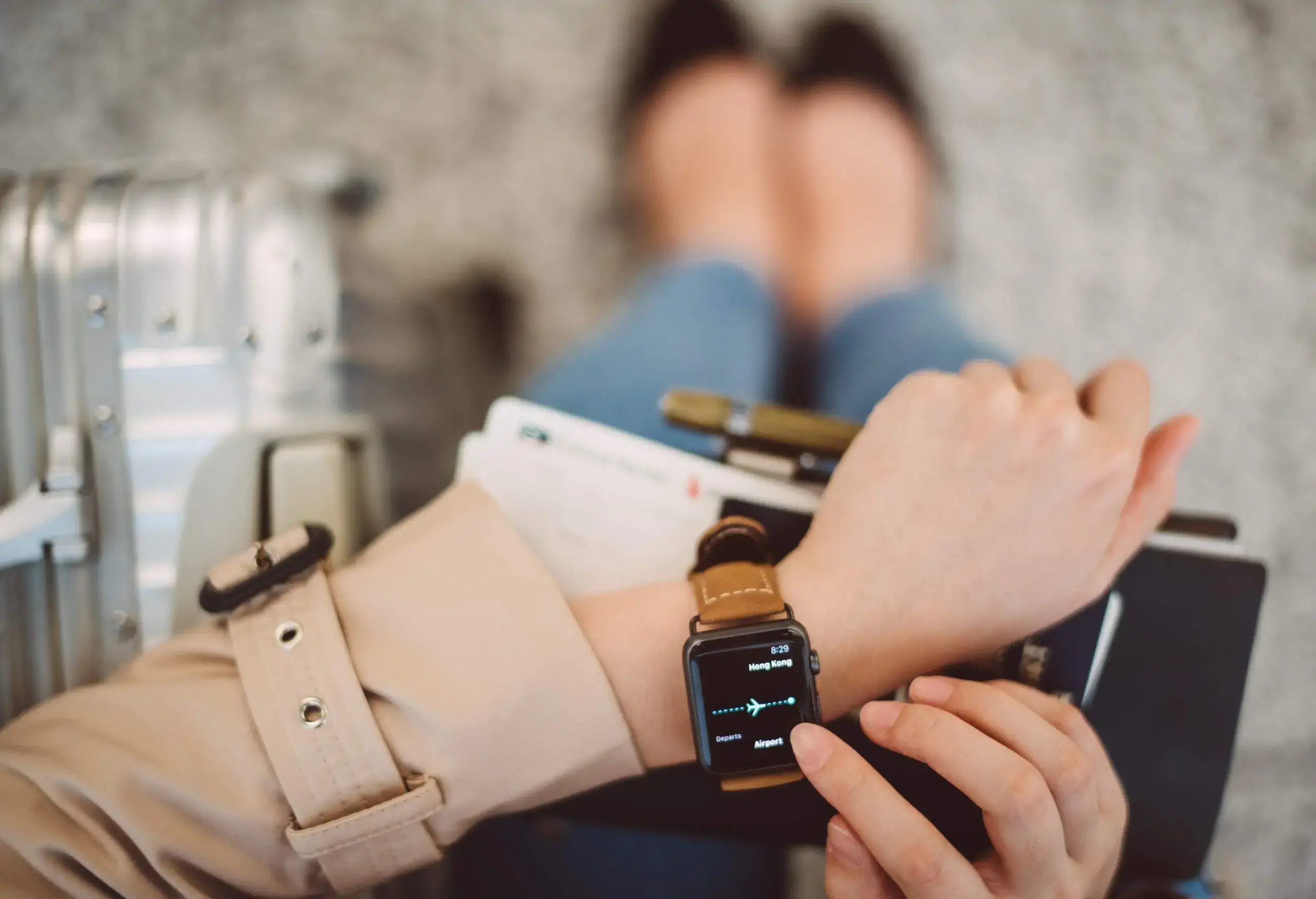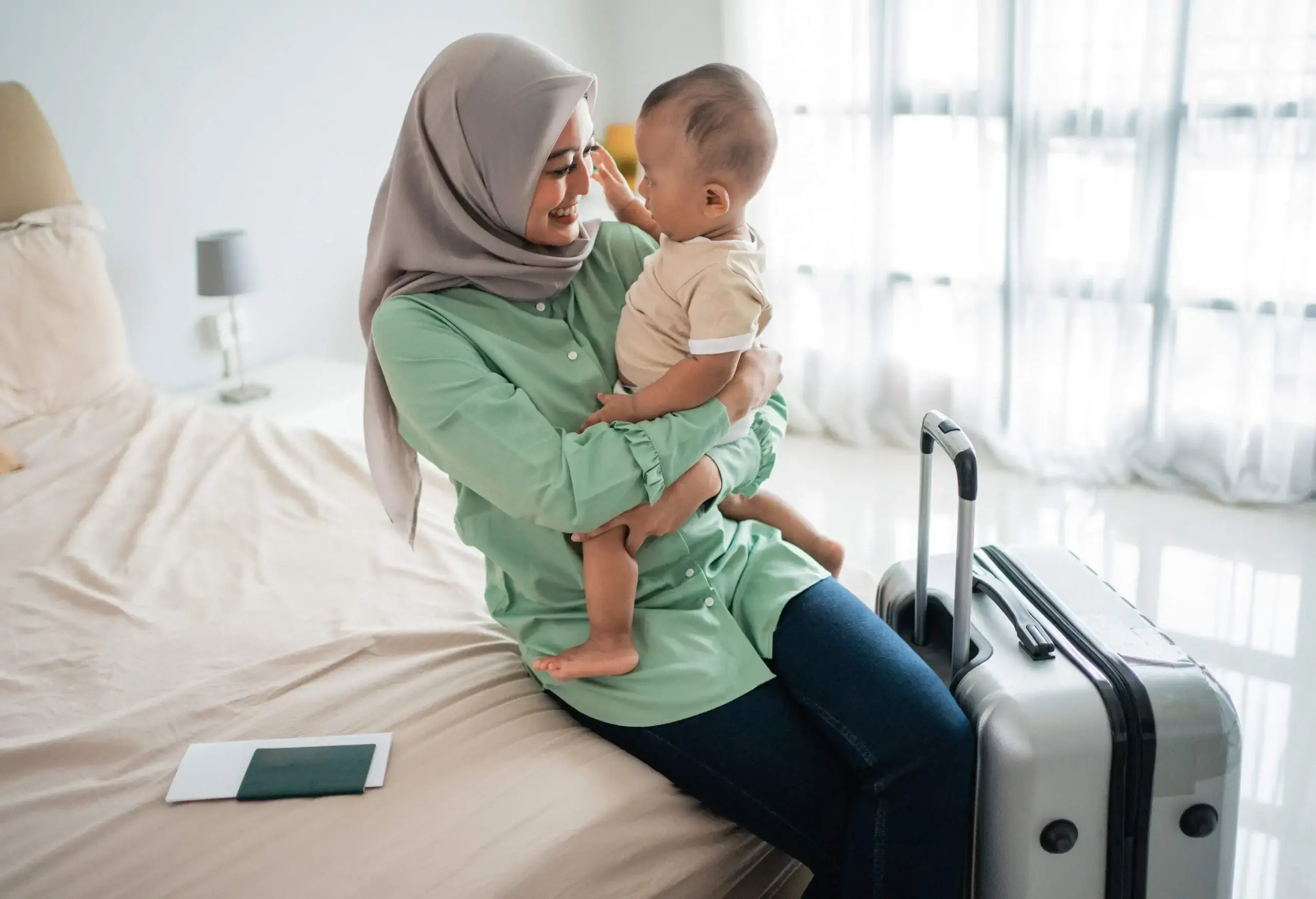

Whether you’re a parent, about to be a parent or thinking about becoming a parent, and you love to travel internationally, you’re probably already thinking about whether or not a baby needs a passport. The simple answer: yes, always if they’re flying abroad. There are a few exceptions but generally speaking, it’s best to get a passport for your baby. Here’s everything you need to know about baby passports, including how to get one.
In this post
Do babies need to have a passport?
How soon can a newborn get a passport?
Applying for your baby’s passport
Our tips for your baby’s passport application
Can newborns travel without a passport?
Can babies use Real IDs instead of passports?
FAQ
Do babies need to have a passport?
For international air travel and for most international travel generally, U.S. citizen infants and children must have a passport. The rules are pretty straightforward, but there are some important nuances to know.
If you’re flying to Canada or Mexico, your baby needs a passport. Period. But if you’re driving or taking a ferry to these countries, the rules get a bit more flexible. For U.S. re-entry by land or sea, Western Hemisphere Travel Initiative (WHTI) compliant documents like passport cards, enhanced driver’s licenses, or Trusted Traveler cards are accepted. In some cases, particularly for children on certain closed-loop cruises or land border crossings, an original or certified birth certificate may be acceptable for re-entry into the U.S.
Here’s the catch: just because U.S. Customs will let you back in doesn’t mean the destination country will let you in without a passport. Canada and Mexico can require passports for entry even if you’re arriving by land or sea. And cruise lines often have their own policies that require passports regardless of what the government says. So while you might technically be able to get away with just a birth certificate in some scenarios, you’re taking a gamble that could leave you stuck at a border or unable to board your ship.
As with adults, travel domestically across the U.S., including its territories like Puerto Rico, Guam, and the U.S. Virgin Islands, does not require a passport for babies. These destinations are treated as domestic travel for U.S. citizens, making them perfect for a passport-free beach vacation with your little one.
How soon can a newborn get a passport?
Good news: there’s no minimum age restriction for getting a passport. You can apply for your newborn’s passport as soon as you have the required documents, particularly an acceptable birth certificate and your own identification. The U.S. Department of State will process passport applications for infants just as they do for adults.
The timeline, though? That’s where you need to plan ahead. Routine passport processing currently takes about 4 to 6 weeks (not including mailing time), while expedited service runs about 2 to 3 weeks (also not including mailing). During peak travel seasons, these timeframes can stretch even longer. You can, however, expedite the passport application process for newborns just as adults can, which costs an additional $60 on top of the regular fees.
If you have a genuine life-or-death emergency requiring immediate international travel, urgent appointments at passport agencies are available. You’ll need to provide documentation proving your emergency and show that you must travel within 14 days. These situations are rare, but it’s good to know the option exists if you find yourself facing an unexpected family crisis abroad.
Applying for your baby’s passport
Applying for a passport for minors, including babies, requires a few additional steps compared to applying as an adult. The process is designed to ensure both parents are aware of and consent to the passport application.
What do parents need to get a baby passport?
To apply for a baby passport, parents need to gather quite a bit of documentation. Here’s your checklist:
- A completed Form DS-11 for your child (this is the application for a U.S. passport, and it must be filled out but not signed until you’re at the acceptance facility)
- Your child’s Social Security number if one has been issued (if not, you’ll need to submit a signed statement declaring that no SSN has been issued)
- Your child’s original birth certificate or other evidence of U.S. citizenship, plus a photocopy (the birth certificate must show the required data and seal)
- Documentation proving your parental relationship to the child, such as a birth certificate or adoption decree (often the birth certificate fulfills both citizenship and parental relationship requirements)
- Both parents’ physical photo IDs, such as passport books or driver’s licenses, plus photocopies
- Parental consent from both parents or guardians (if you’re a sole legal authority, you must provide supporting documentation like a court order or death certificate)
- One compliant passport photo of your child (see the State Department’s photo requirements for specifics)
- Payment for the application fee ($100 for a passport book) and the execution fee ($35), for a total of $135
If you’re considering a passport card instead of a book, the application fee drops to just $15 (plus the same $35 execution fee). But remember, passport cards are only valid for land and sea travel to Canada, Mexico, Bermuda, and the Caribbean. They won’t work for international air travel.

What is the process to follow?
Both parents must bring all the documentation to an authorized passport acceptance facility, which could be a post office, library, or other designated location. Both parents and the child must appear in person. Yes, even if your baby is just a few weeks old, they need to be physically present at the appointment.
If one parent cannot attend, you’ll need to fill out Form DS-3053 (Statement of Consent), have it notarized, and bring it along with a photocopy of the front and back of the absent parent’s ID. If neither parent can attend, special arrangements can be made with proper notarized consent forms, though this gets complicated quickly and you should contact the State Department for guidance.
The acceptance agent at the facility will review your documents, witness the parents signing the application, and collect your payment. They’ll then send everything off to the State Department for processing. Your completed passport will arrive separately from your supporting documents, which can take up to four weeks after you receive the passport.
Our tips for your baby’s passport application
After researching passport policies and talking to parents who’ve been through this process, here are the insider tips that’ll save you headaches:
- Make sure your baby’s passport photo meets all current standards.
- Have your child’s Social Security number ready before you go. If they don’t have one yet, prepare a signed and dated statement with the specific wording required by the State Department declaring they’ve never been issued an SSN.
- Consider the passport card versus book decision carefully. If your international travels are truly limited to Canada or Mexico by land or sea, the passport card at $15 (versus $100 for the book) makes financial sense. But if there’s any chance you’ll fly internationally, spend the extra money for the book. You can always get both, too.
- Mark your calendar for renewal. Passports for children under 16 expire every 5 years (not 10 like adult passports). Set a reminder for about 6 months before expiration so you’re not scrambling before your next trip.
- If you’re applying for expedited service or want faster return shipping, factor in those additional costs: $60 for expedited processing and $22.05 for 1-2 day return delivery of the passport book (note that passport cards don’t qualify for expedited return delivery).
- Take extra copies of everything. Seriously. Having backup photocopies of your IDs, your child’s birth certificate, and any consent forms can save you if something gets misplaced during the application process.
Can newborns travel without a passport?
Newborns can travel domestically without a passport. This includes travel to U.S. territories such as Puerto Rico or Guam, which are particularly ideal for beach vacations. Airlines and the TSA don’t require any ID for children under 18 traveling domestically with an adult companion.
For international travel, the picture gets more complicated. While WHTI allows certain alternatives to passport books for land and sea travel to Canada, Mexico, Bermuda, and the Caribbean, relying on just a birth certificate is risky. Here’s why: even if U.S. Customs will let you back into the country with a birth certificate, the destination country might require a passport for entry. Canada and Mexico can and sometimes do require passports even for land border crossings.
The bottom line? While you might technically be able to travel to neighboring countries by land or sea with just a birth certificate in some scenarios, you’re gambling with your vacation. For the relatively small investment of getting a passport, you eliminate all that uncertainty.
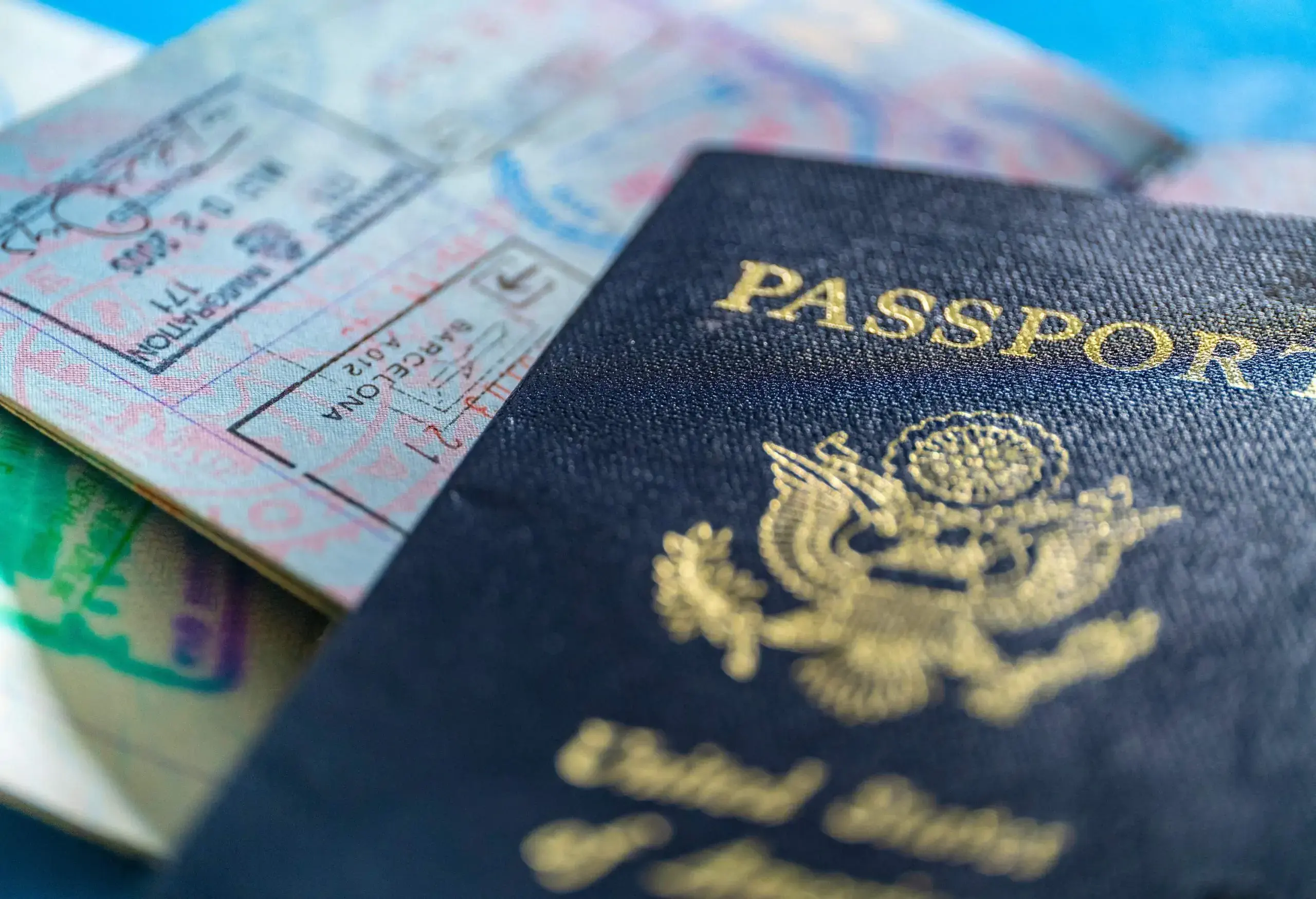
Can babies use Real IDs instead of passports?
No, babies cannot use Real IDs instead of passports for international travel. Minors do not need to present ID for domestic travel if they are traveling with an adult companion.
No, babies cannot use Real IDs instead of passports for international travel. Real ID is a domestic identity standard for U.S. driver’s licenses and state IDs, and it has nothing to do with international travel requirements. For any international air travel, a passport is required regardless of Real ID status.
For domestic travel, the good news is that minors don’t need to present any ID at all if they’re traveling with an adult companion. TSA policy explicitly states that children under 18 are not required to provide identification when traveling domestically. So while adults will need to show their Real ID-compliant licenses or passports starting May 7, 2025, your baby gets a free pass on the whole ID situation for domestic flights.
Conclusion
Babies need passports to travel internationally by air, and while there are some narrow exceptions for land and sea travel to Canada and Mexico or on closed-loop cruises, those exceptions come with enough caveats that getting a passport is almost always the smarter choice. The application process takes time and requires both parents to appear with proper documentation, so plan ahead and give yourself at least a few months before any international travel.
For more information about traveling with infants, check out our guides to babyproofing your vacation rental and breastfeeding while traveling.
Frequent questions about passports for babies
Your child’s passport book arrives in a separate, trackable envelope, while the passport card is mailed separately via First Class Mail. Citizenship evidence like the birth certificate is mailed separately and can take up to four weeks after you receive the passport.
Yes, you can pay for Priority Mail Express when submitting your application. To have the completed passport book returned via 1-2 day delivery, include the $22.05 return delivery fee with your payment (this option isn’t available for passport cards).
No, children under 16 cannot renew by mail. A child must appear in person with a parent or guardian and submit Form DS-11 at a passport acceptance facility for each new passport.
Check your application status online using the State Department’s passport status tool or the email address you provided on the form. You can also call the National Passport Information Center with your application number for updates.
Replace a passport if it has water damage, major tears, unofficial markings, missing pages, or a hole punch. To replace a damaged passport, submit the damaged passport, Form DS-11, supporting documents, a photo, and fees at an acceptance facility.
Yes, babies need passports to go to Mexico or passports to go to Canada if traveling by air. For land or sea travel, WHTI-compliant documents or birth certificates may be accepted for U.S. re-entry, but destination countries can still require passports for entry.
The foregoing article was last updated in December 2025. It does not contain legal advice and is for informational purposes only. KAYAK does not guarantee, and accepts no legal liability arising from or connected to, the accuracy, reliability, currency, or completeness of any of the information contained in this article and/or any of the content linked to within it. Always check the official government website of your departure and arrival destinations prior to travel for up-to-date information.
Sources:
https://travel.state.gov/content/travel/en/passports/how-apply/fees.html
https://www.cbp.gov/travel/us-citizens/know-before-you-go/your-trip
https://travel.state.gov/content/travel/en/passports/get-fast.html
https://www.dhs.gov/real-id/real-id-faqs
https://travel.state.gov/content/travel/en/passports/how-apply/photos.html
https://travel.state.gov/content/travel/en/passports/passport-help/faqs.html
https://travel.state.gov/content/travel/en/passports/need-passport/under-16.html