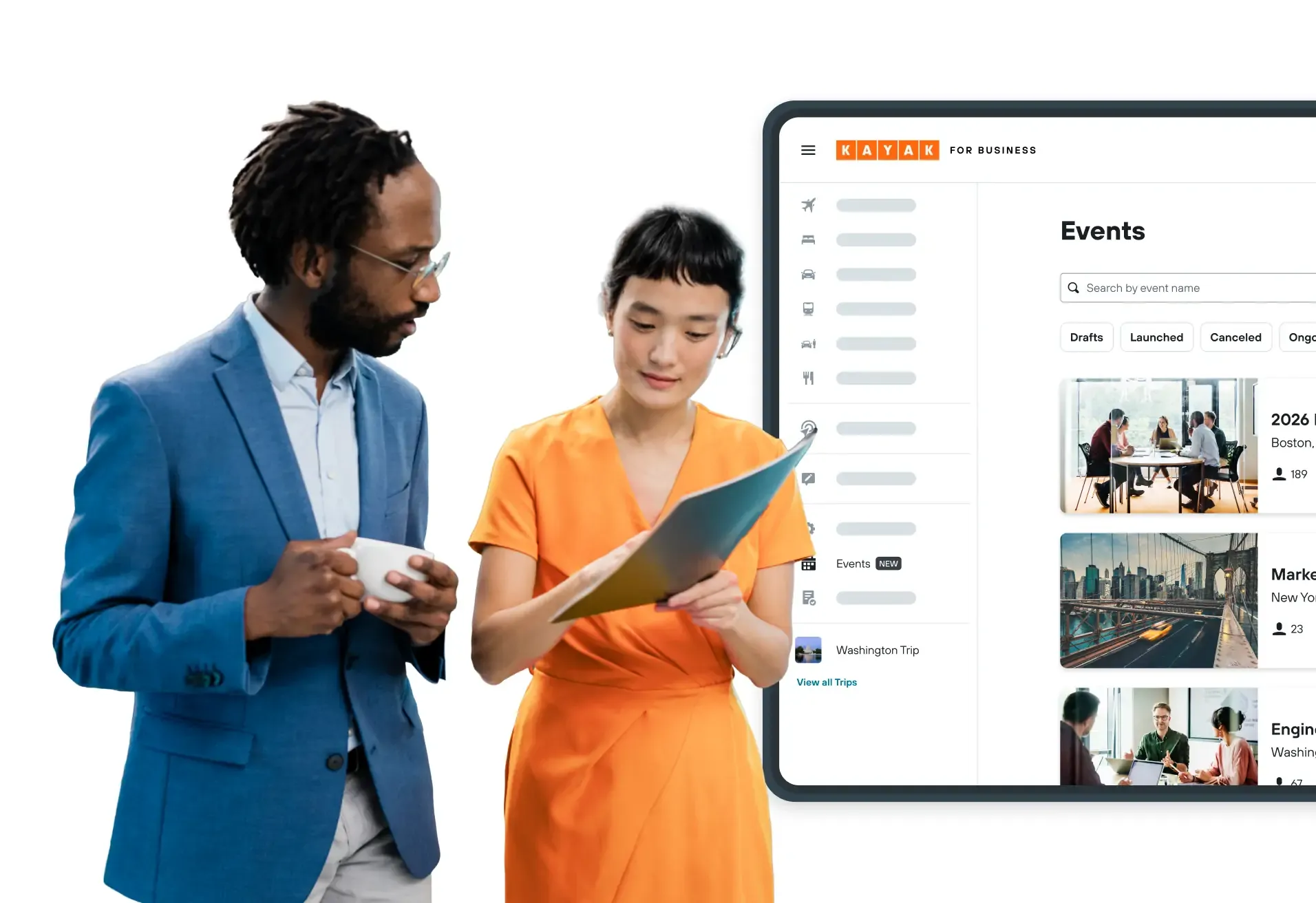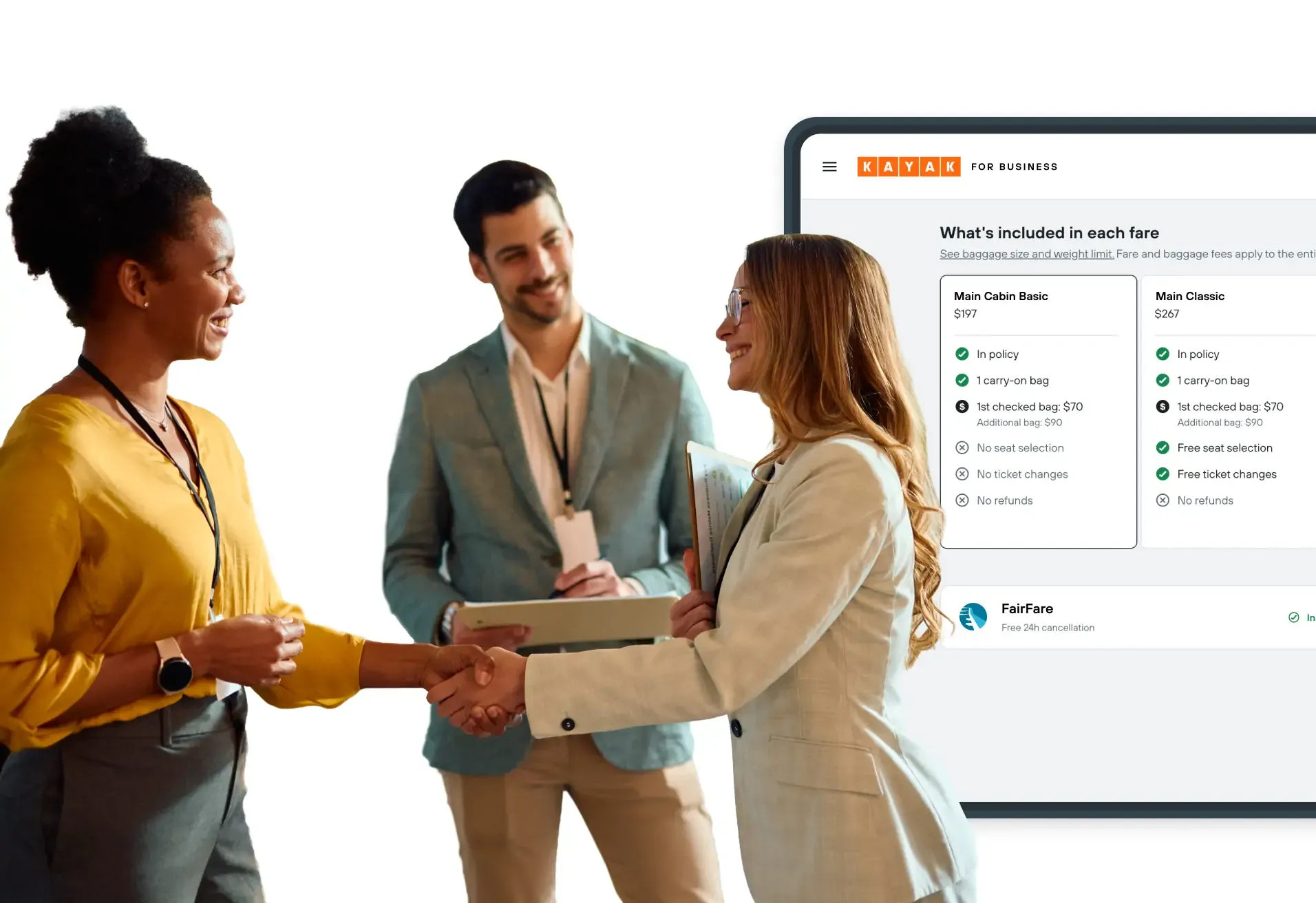

Why outdated travel processes are holding teams back, and what forward-thinking companies are doing instead.
Many corporate travel processes in place today were designed to support smaller teams and simpler travel needs. Coordinating trips through spreadsheets, email threads, and manual approvals was often sufficient when travel was infrequent and largely individual.
Today, however, corporate travel looks very different. Teams travel with clearer objectives, higher expectations, and greater visibility – particularly when it comes to off-sites, conferences, and company-wide events. As travel volumes and complexity increase, managing these trips across disconnected tools makes it harder to maintain oversight, control costs, and respond quickly to change. Information becomes fragmented, workflows slow down, and planning travel at scale requires more manual coordination than teams can reasonably sustain.
Today, however, corporate travel looks very different. Teams travel with clearer objectives, higher expectations, and greater visibility – particularly when it comes to off-sites, conferences, and company-wide events. As travel volumes and complexity increase, managing these trips across disconnected tools makes it harder to maintain oversight, control costs, and respond quickly to change. Information becomes fragmented, workflows slow down, and planning travel at scale requires more manual coordination than teams can reasonably sustain.
The challenge isn’t a lack of process. It’s that the way corporate travel is organized hasn’t evolved in step with how modern teams plan, travel, and come together.
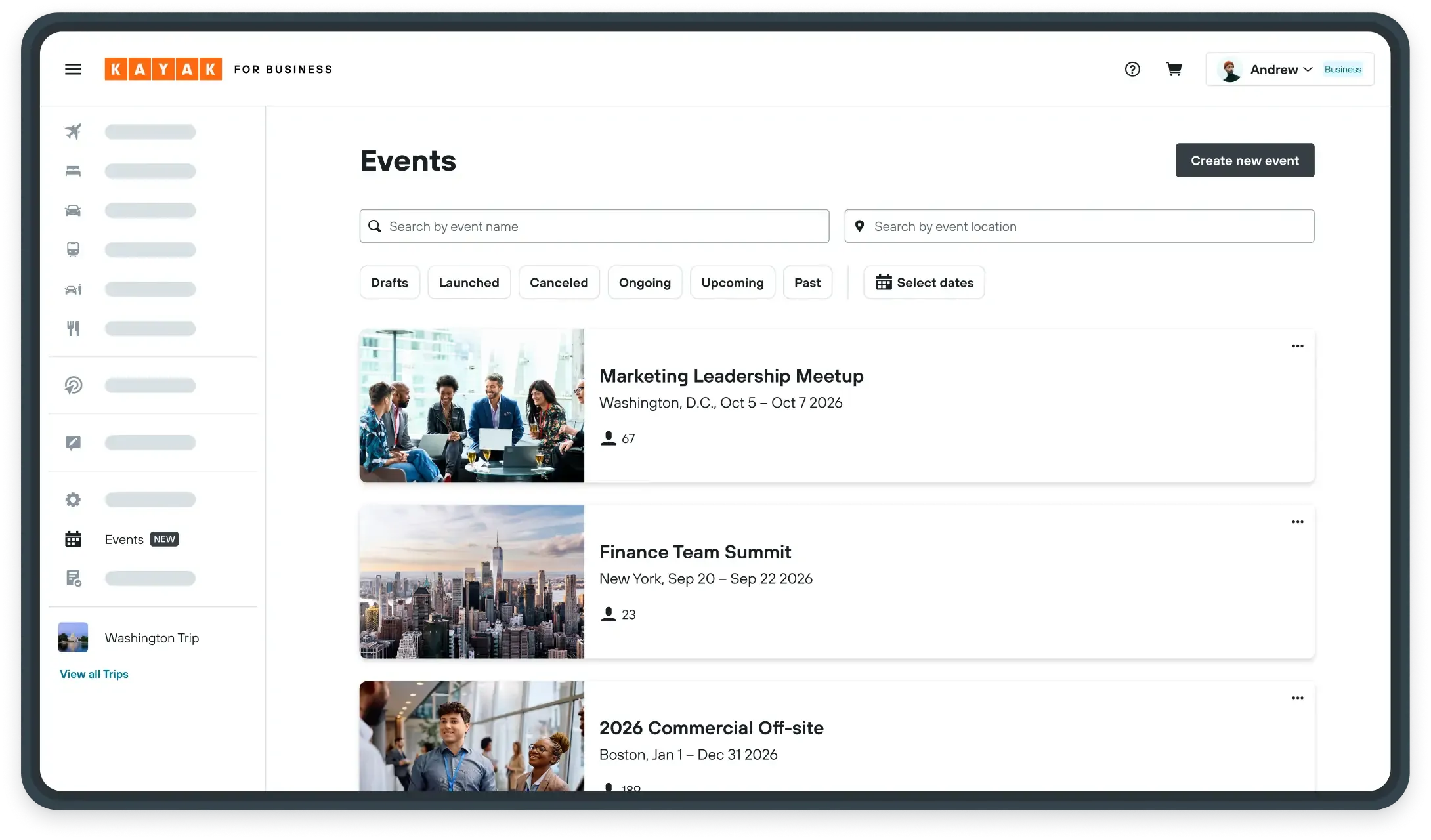
As part of this shift, KAYAK for Business has introduced Events, a feature designed to help companies plan and manage travel specifically around business events.
Book your demo to see it in action here.
Corporate travel is becoming more intentional and strategic
Corporate travel is no longer driven by volume, but by purpose. Teams are traveling less frequently, yet each trip carries more weight, whether it’s bringing people together for an offsite, attending an industry conference, or meeting clients in person. These trips are planned with clear objectives and higher expectations around experience, cost control, and outcomes.
At the same time, companies are placing greater emphasis on visibility and accountability across travel planning. There is a growing need to understand costs upfront, align travel with internal guidelines and policies, and support teams without adding unnecessary friction.
For event travel, this often means having clearer insight into participation, bookings, and policies before anyone travels. Events by KAYAK for Business was built to support this need. This shift has raised expectations for how corporate travel is organized and managed.
As travel becomes more intentional, the processes behind it need to enable better coordination, faster decision-making, and clearer oversight, especially when multiple people are traveling for the same purpose.
Where existing travel processes start to show their limits
As corporate travel becomes more coordinated and more visible, existing processes are often put under pressure, particularly when multiple people are traveling for the same purpose. Planning travel across separate tools can make it difficult to maintain a clear, real-time view of who is traveling, what has been booked, and how plans are evolving. Small changes, such as date adjustments or last-minute additions, can quickly create confusion and require multiple follow-ups to resolve.
Without a centralized way to manage travel planning, visibility is often reactive rather than proactive. Understanding total costs, tracking progress, or making informed decisions requires manual effort and cross-checking information across systems. While these workflows may still function, they demand increasing time and attention as business travel activity grows. Over time, this creates friction for both the people organizing travel and the teams traveling themselves, especially when coordination matters most.This is often where teams begin looking for features, like Events , that are designed to handle travel planning at the event level.
Why our Events feature raise the bar for corporate travel planning
Events introduce a higher level of complexity to corporate travel. Coordinating trips for multiple people around shared dates and locations requires far more alignment than individual travel, especially when plans change at short notice.
This shift has changed what effective travel planning looks like. Managing event travel across disconnected tools makes it harder to maintain oversight, respond quickly to changes, or understand costs in real time. Instead, companies increasingly need a single place to plan, manage, and track travel tied to events, with clear visibility before, during, and after the trip. Internal travel guidelines and policies need to be built in from the start, without adding manual work or unnecessary friction. When travel planning works this way, it creates a smoother experience for travelers and clearer control for the business.
Introduce a smarter way to bring teams together
To meet these evolving expectations, KAYAK for Business introduced Events : a new way to plan and manage travel for business events around shared moments, not just individual trips. Events brings travel for off-sites, conferences, and company gatherings into one centralized platform, making it easier to coordinate travel for multiple people with greater clarity and control.
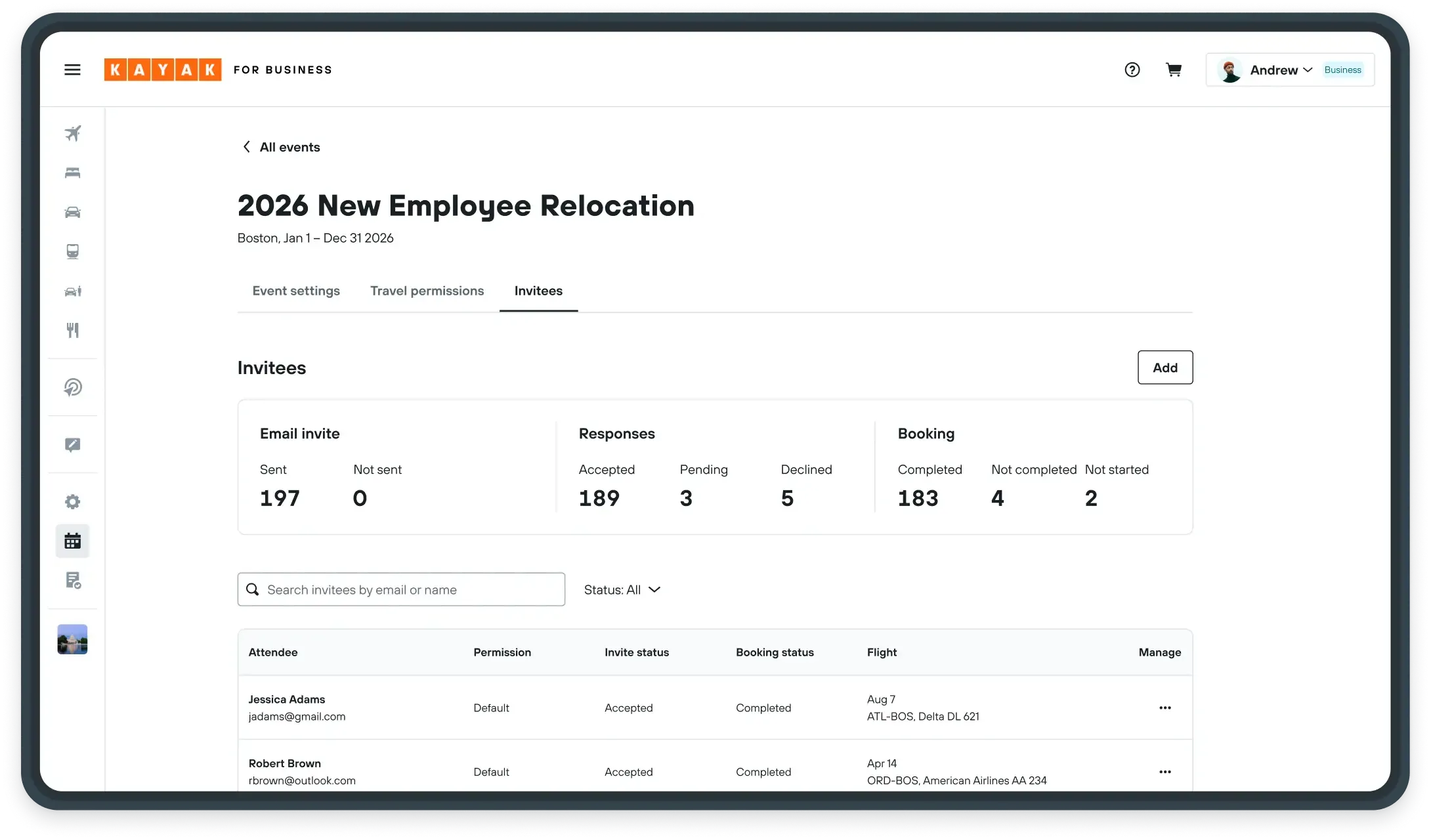
By organizing travel at the event level, companies can see who is traveling, what has been booked, and how plans are progressing, all in one view. This structure helps reduce manual coordination and makes it easier to adapt when plans change. Events is designed to work naturally within existing travel workflows, while giving companies the visibility and consistency needed to manage event travel more effectively.
To see how Events can support your company’s travel planning, book a demo.
Key benefits of Events
Events are no longer one-off exceptions to standard travel planning; they are central to collaboration, culture-building, and driving business forward. Raising the bar in business travel isn’t about adding more process; it’s about enabling teams to operate the way they already do: faster, more distributed, and more connected.
Centralized event travel management
Plan, invite, book, and oversee event travel in one place, eliminating fragmented tools and manual coordination.
Event-specific policies with built-in compliance
Set travel guidelines upfront to keep bookings aligned with internal requirements and budget controls.
Streamlined attendee experience
Invite participants at scale, manage RSVPs efficiently, and allow attendees to self-book through KAYAK’s global marketplace.
Connected, real-time visibility
Track participation, bookings, and overall travel activity in one view, reducing surprises and last-minute reconciliation.
Simplified adjustments and reporting
Keep all travel linked to the event for easier changes, oversight, and post-event analysis.
Flexible and scalable by design
Support how modern teams operate with tools built for collaboration, transparency, and growth.
Book your demo to see it in action here.
About KAYAK for Business
KAYAK for Business combines the power of the world’s leading travel search engine with tools designed specifically for business travelers. It serves companies of every size, from fast growing startups to global enterprises, helping them book, manage, and track business travel in one place.
For more information, visit https://www.kayak.com/business/.