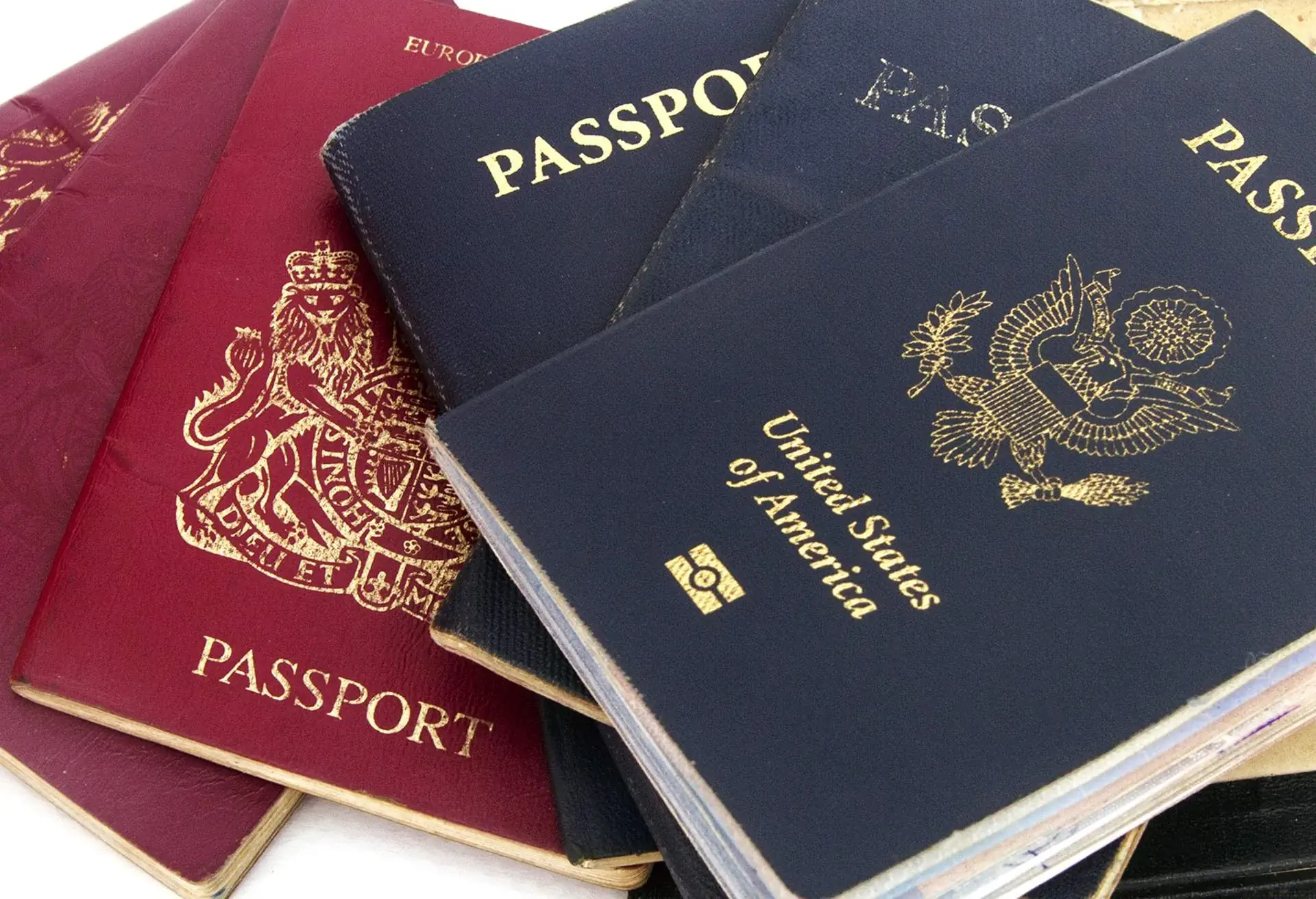

Ever wondered what the most powerful passports in the world are? Or more importantly, where yours ranks among the rest? Let’s dive into what makes a passport powerful and how your travel document measures up.
In this post
Powerful passport: what does that mean?
Is the “power” of a passport important?
Which country has the most powerful passport?
Which countries are on the top 5 of the best passports in the world?
How strong is the U.S. passport?
The 10 least powerful passports
The openness ranking
Top 5 most open destinations
Frequently asked questions about passport power
Powerful passport: what does that mean?
First things first – what does it even mean to have a powerful passport? A strong passport is one that has access to many other countries visa-free or with visa-on-arrival. The strongest passports in the world allow you to travel to most places unhindered, no advance paperwork required.
Rankings like the Henley Passport Index measure this by counting how many destinations you can enter without getting a traditional visa beforehand. They use IATA travel data to track visa-free access, visa-on-arrival privileges, and electronic travel authorizations across all global destinations.
So which country do you think has the best passport in the world? Many might assume the United States of America. But if that was your guess, you’d be wrong.
Is the “power” of a passport important?
Does having the best passport in the world matter? Well, if you never plan to leave your home country, it may not matter much to you. But if you’re looking to travel at all, no matter the purpose, there are many benefits to having a powerful passport.
The most powerful passports in the world obviously make leisure travel much easier. But having a strong passport also offers the opportunity to travel for business and education. It gives people easier access to the global economy and contributes to a more globalized mindset.
Those with weak passports are barred from entering countries that may provide opportunities for them to educate themselves and improve their economic status. Those with strong passports, however, have access to the world to expand their minds and their wallets. It’s not just about vacation flexibility, it’s about economic mobility and opportunity.
Which country has the most powerful passport?
The strongest passport in the world actually belongs to Singapore. That’s right – people with Singaporean passports have access to a whopping 192 destinations, as measured by Henley & Partners. Singapore has held this top spot consistently, thanks to the city-state’s strong diplomatic relationships and robust international standing.
Which countries are on the top 5 of the best passports in the world?
So, if the U.S. isn’t in the top 5 of the most powerful passports in the world, let’s see who is. Based on the latest Henley Passport Index (January 2026), here’s how the top tier shakes out:
- Singapore (access to 192 destinations)
- Japan and South Korea (access to 188 destinations)
- Denmark, Luxembourg, Spain, Sweden and Switzerland (access to 186 destinations)
- Austria, Belgium, France, Germany, Ireland, Italy, Netherlands, Norway and Portugal (multiple countries with similar high-level access)
- Greece, New Zealand and several other European nations round out the top groupings
What’s interesting is how tightly packed the top rankings are. The difference between first and fifth place is just a handful of countries, which shows how competitive global mobility has become. European Union countries dominate the list thanks to their collective visa agreements and strong diplomatic ties worldwide.
How strong is the U.S. passport?
The U.S. passport returned to the top 10 in the January 2026 Henley Passport Index, with American passport holders able to access 179 destinations visa-free. While that’s still incredibly strong by global standards, it’s a notable shift from decades past when the U.S. passport was consistently in the top tier.
The U.S. ranking reflects both diplomatic relationships and reciprocal visa policies. Some countries that once offered Americans easy access have tightened their requirements, while geopolitical shifts have opened new doors elsewhere. For most American travelers, though, 179 visa-free destinations still means the world is pretty much your oyster.
The 10 least powerful passports
On the opposite end of the spectrum, some passports offer very limited travel freedom. The weakest passport belongs to Afghanistan, ranked last in the 2026 index with access to just 24 destinations visa-free. This reflects the country’s complex political situation and limited diplomatic recognition.
The bottom tier of passport power typically includes countries facing international sanctions, ongoing conflicts, or limited diplomatic relationships. While exact rankings shift slightly year to year, the countries with the least powerful passports generally include:
- Afghanistan with access to 24 destinations
- Syria with very limited access
- Iraq with restricted travel options
- Yemen and Pakistan with limited visa-free agreements
- Somalia with minimal international access
- Nepal with developing diplomatic relationships
- The Palestinian Territory, Libya and Bangladesh with restricted mobility
- North Korea and Eritrea with highly limited access
The openness ranking
Henley & Partners have also developed an “openness” ranking that flips the script. Instead of measuring how many countries you can visit, it measures how many nationalities each country welcomes visa-free. This represents how open a given country is to outsiders and whether they’re able to attract visitors without bureaucratic barriers.
Put simply, the most open countries are the ones where the greatest number of nationalities can enter visa-free. This metric is fascinating because it reveals which destinations are actively courting international visitors and which are more restrictive. Tourism-dependent economies often rank high on openness, while countries with security concerns or limited infrastructure may be more selective.
Top 5 most open destinations
While there are many countries that are considered open, five of them stand out among the rest because of their natural beauty, safe atmosphere, and welcoming visa policies.




Frequently asked questions about passport power
Passport rankings update whenever countries modify their visa policies, with major indexes like Henley publishing new rankings quarterly. Rankings can shift due to new bilateral agreements, geopolitical changes, or policy updates, so check the latest release date before making travel plans.
Not quite. Visa-free means you don’t need to apply for a traditional visa in advance, but countries often still require proof of onward travel, minimum passport validity (usually six months), travel insurance, or proof of sufficient funds. Always verify specific entry requirements before booking your trip.
Use official sources like your destination’s embassy or consulate website, your government’s travel advisory site (like travel.state.gov for U.S. travelers), or IATA Timatic, which airlines use to verify travel document requirements. These provide the most reliable, up-to-date entry rules.
The passport index measures how many destinations holders of a specific passport can enter visa-free (outbound mobility). The openness ranking measures how many nationalities a destination allows to enter visa-free (inbound openness). They’re essentially opposite perspectives on global mobility.
Your passport’s power is tied to your citizenship, which you can’t change easily. Options include naturalization after long-term residency, obtaining dual citizenship if your country allows it, or citizenship-by-investment programs, though each has significant legal and financial requirements. For most people, working with the passport you have is the practical approach.
Leading indexes like Henley use IATA travel document data to count destinations accessible without a prior visa, including visa-free entry, visa-on-arrival, and electronic travel authorizations. The methodology is transparent and updated regularly as visa policies change worldwide.
Conclusion
Now that you know how your passport ranks, it’s time to put it to work. Whether you’re holding one of the world’s most powerful travel documents or working with more limited options, there’s a whole world out there waiting to be explored. Start looking for flights to your next destination and make those visa-free privileges count.
Before you book, though, remember that visa-free doesn’t always mean zero requirements. Many countries still require proof of onward travel, travel insurance, or minimum passport validity (often six months beyond your planned departure). Always check the specific entry requirements for your destination, even if you don’t need a visa.
The foregoing article was last updated in January 2026. It does not contain legal advice and is for informational purposes only. KAYAK does not guarantee, and accepts no legal liability arising from or connected to, the accuracy, reliability, currency or completeness of any of the information contained in this article and/or any of the content linked to within it. Always check the official government website of your departure and arrival destinations prior to travel for up-to-date information.
Sources:
https://www.henleyglobal.com/passport-index/ranking
https://www.henleyglobal.com/publications/henley-openness-index
https://travel.state.gov/content/travel/en/international-travel/