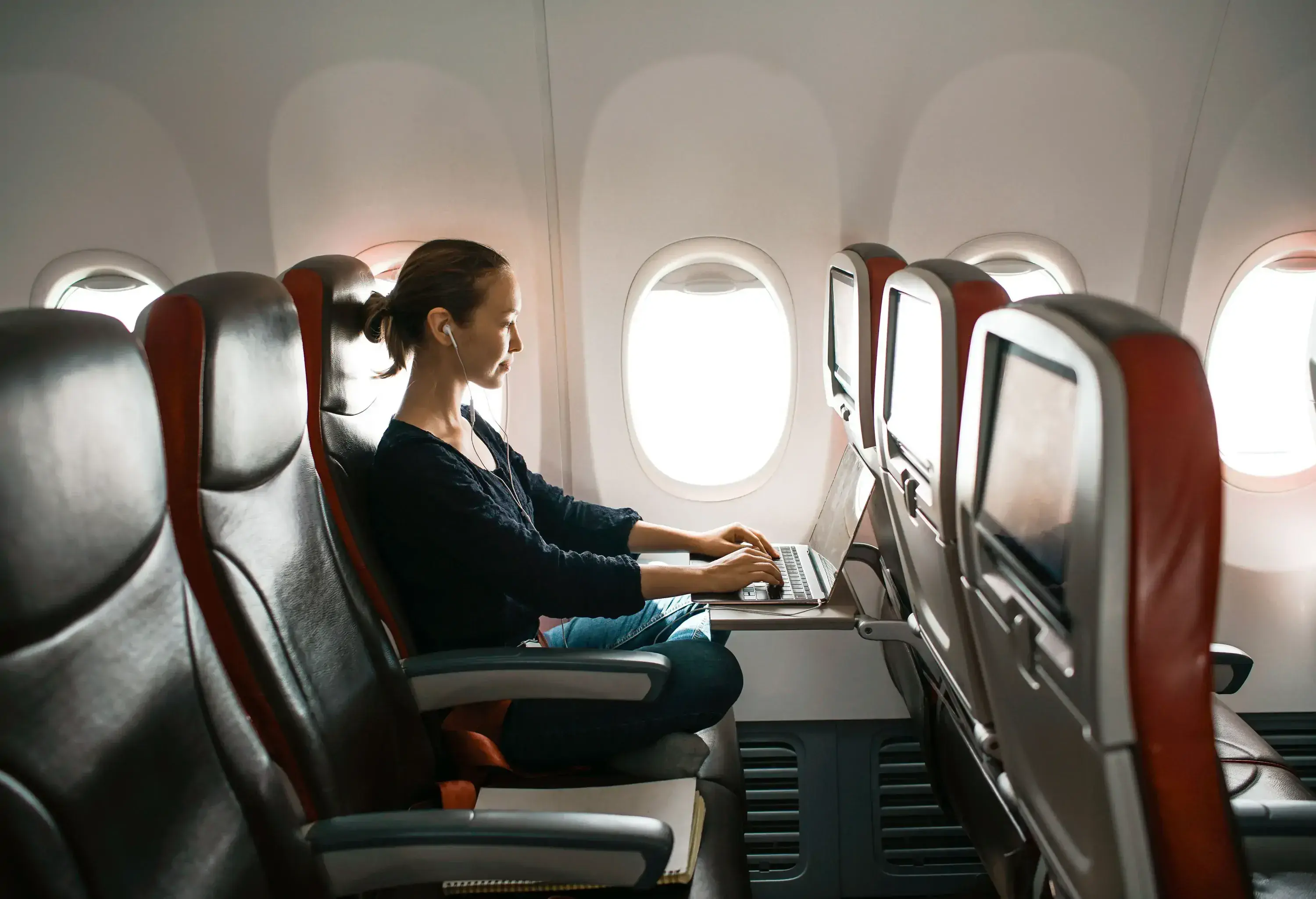

Economy seats are the standard class of air travel, offering basic seating at the lowest fare tier. In my experience, the best economy seat airlines (especially for long-haul) include Cathay Pacific, Japan Airlines and JetBlue.
This article focuses on the most comfortable options within that class — because while economy is where most of us fly, comfort levels vary wildly between airlines.
In this article
- The most comfortable long-haul economy seats.
- The most comfortable budget economy seats on U.S. airlines.
- How to choose the best economy seat.
- Most comfortable economy seat FAQs.
The most comfortable long-haul economy seats.
The quality of economy seats is constantly changing as new airplane designs emerge. There are, however, a few Economy seat comfort means different things depending on flight length. On long-haul flights — usually 8+ hours — pitch, recline and entertainment start to matter a lot.
Airlines like Japan Airlines and Singapore Airlines invest heavily here because travelers notice every inch. Expect 32–34 inch pitch, adjustable headrests and personal screens.
Japan Airlines
Rated the world’s best economy seat in 2025 by Skytrax – and it’s easy to see why. Its Airbus A350-1000 has the most generous economy of any airline. A 34-inch seat pitch and 19-inch width combined with a smart layout and big windows feels surprisingly roomy. Even with the 3-3-3 layout.
Power chargers, USB-A and C ports and 13-inch 4K multimedia screens all add to the experience. I particularly love the water bottle pouch – a simple idea that eliminates a genuine pain point for flyers.
Cathay Pacific
Another regular award winner for best economy seat overall. Cathay also flies the A350-1000, this time with 32-inch seat pitch and 18-inch width in a 3-3-3 configuration. Cabin design, big windows and Cathay’s famed service make long haul flights far more bearable.
I find Cathay’s seats particularly comfy (relatively speaking) beyond just the statistics. Deep cushioning, versatile leather headrests, and even a dark mode on entertainment screens.
Qatar Airways
Qatar’s modern fleet includes a range of widebodies like the A380, A350-1000. Economy seats are slim but well padded, with 32-inch pitch and 18-inch width. Layouts vary, but best is upper deck economy in the A380 with a 2-4-2 configuration and fewer passengers in the cabin.
Renowned for its hospitality and good condition cabins, one of Qatar’s big strengths is the consistency of its economy offering.
Singapore Airlines
As with its world-beating first class suites, Singapore brings quality and convenience to its economy seats. On the A380, despite the 3-4-3 layout, economy seats have a 32-inch pitch and 19-inch width.
Seats are incredibly well thought out – ergonomic with lumbar support, padding, six-way adjustable headrest and industry-leading six-inch recline. Handily, the entertainment screens also tilt to get the best viewing angle.
The most comfortable budget economy seats on U.S. airlines.
While international airlines undoubtedly offer the best economy seats for long-haul, several U.S. airlines also have pretty comfortable economy seats. While you couldn’t call them luxurious, these will fly you in reasonable comfort.
JetBlue Airways
With the most generous economy seat legroom of any U.S. airline, JetBlue is a shoe-in as the comfiest, especially for taller travelers. Onboard its A321 you’ll find a 3-3 layout with 18-inch wide seats, 32-inch pitch and adjustable headrests.
JetBlue is also ahead of many competitors with its facilities and amenities. All seats have seatback screens and WiFi is free onboard – even for economy passengers. That alone makes JetBlue unique among domestic U.S. airlines.
Alaska Airlines
Alaska offers a more typical economy-class experience. On its fleet of 737s you’ll find 17-inch wide seats, usually with 31 inches of pitch, in a 3-3 configuration. Seats are comfy though, with good padding and just enough recline to make a difference.
While economy class seats don’t offer entertainment systems or WiFi like JetBlue, they do all feature power and USB outlets.
Southwest Airlines
Coming in just behind JetBlue for legroom, Southwest averages a 31.8-inch economy seat pitch on most of its fleet. Several of its newer 737-800 and 737 MAX 8 airplanes up that to 32 or 33 inches. Seat widths average 17 inches, increased to 17.8 on the MAX 8.
Considering Southwest’s reputation for budget pricing, its cabins are roomy. It also has one other unique approach to economy class – an open-seating policy. With no assigned seating, it’s a first-come-first-served allocation. I like this approach, but it’s very much a personal preference – I’ve also seen passengers pushing and shoving to get their preferred seat!
Delta
Delta is another airline with a varied fleet that means different Main Cabin economy experiences depending on the plane. On its narrowbody planes you can expect 30 to 31 inches of seat pitch, increased to 32 inches on its 737s and 757s, and its Airbus A220s. Seat widths vary from 17 inches on the 737 to just under 19 inches on the A220.
As well as decent room, Delta’s economy experience is far improved by its excellent in-flight entertainment systems. Most – but not all – planes also feature power and USB chargers.
How to choose the best economy seat?
Not all economy seats feel the same — and the right choice can make a long flight a lot more comfortable. Here’s how to find the best one for you.
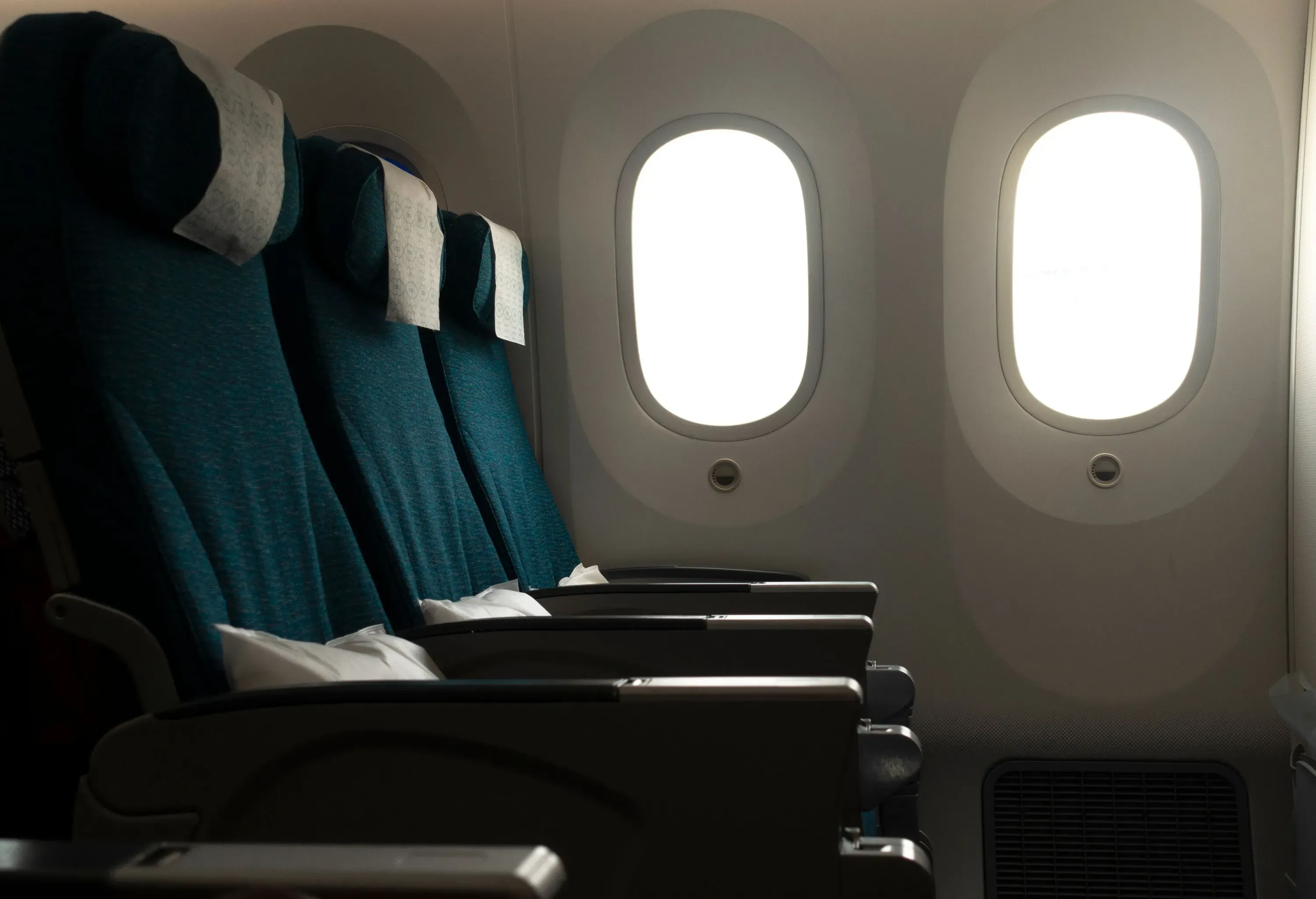
What to look for in an economy seat.
- Seat pitch (legroom): This is the space between rows. It ranges from about 28 inches on budget airlines to 34 inches on more comfortable long-haul flights. A few extra inches go a long way.
- Seat width: Most economy seats are 17–18 inches wide, but some airlines offer up to 19 inches — noticeable on longer flights.
- Aircraft and layout: Plane type matters more than you might think. Newer aircraft like the A350 or 787 tend to feel more spacious. On widebodies, layouts like 2-4-2 or 2-3-2 can offer better seat options, especially along the sides.
- Recline and extras: Recline, adjustable headrests and in-flight entertainment all add to comfort — but availability varies by airline and aircraft.
Where you’ll find the most space.
Once you understand the basics, a few seat types stand out:
- Exit row seats: Extra legroom, often the most space you’ll find in economy. Trade-offs can include limited recline and no under-seat storage.
- Front-section seats: Usually sold as extra legroom or economy plus. You’ll get more space and be among the first off the plane.
- Bulkhead seats: No one reclining into you and solid legroom, but storage is limited during takeoff and landing.
- Two-seat sections: On some widebodies, side pairs mean fewer neighbors and easier access — a good option for solo travelers or couples.
- Window vs aisle: Window for sleeping, aisle for flexibility. Middle seats are best left as a last resort.
Smart ways to pick your seat.
Balancing comfort against cost is tricky, but there are some simple tips you can use to try and maximize both.
- Check the aircraft before you book. Newer plane models like the A350 and 787 are usually the most comfy. I find SeatMaps the easiest way to check.
- Prioritize space on longer flights. For anything over a few hours, extra legroom can be worth the added cost.
- Compare airlines, not just prices. A slightly higher fare can mean significantly more space and better amenities.
- Balance cost and comfort. If multiple airlines fly your route, weigh up the fare differences against seat stats to find the right balance. Sometimes, you’ll pay only a little more money for a lot more comfort!
Most comfortable economy seat FAQs.
A good economy seat pitch is 31–32 inches for domestic flights and 32–34 inches for long-haul. Seat widths of 18 inches or more provide noticeably better comfort than the 17-inch standard found on many narrowbody aircraft.
Extra-legroom economy seats are worth the upgrade on flights longer than two hours, especially for taller travelers. The 3–5 additional inches of pitch can significantly reduce discomfort, and the cost is typically much lower than jumping to premium economy or business class
The comfort difference between airlines in economy can be substantial. Seat pitch ranges from 28 inches on some budget carriers to 34 inches on airlines like Japan Airlines, while amenities vary from no screens or power to high-resolution entertainment with USB-C charging. Checking the aircraft before you book can help you avoid surprises.
Premium economy seats are a separate cabin class positioned between standard economy and business. They offer wider seats (18–19 inches), more pitch (36–40 inches), better recline and upgraded amenities like larger screens and amenity kits — at a price point roughly 50–100% above economy fares.