

Long flights don’t have to mean stiff legs, bad sleep and counting down the hours until landing. With a little planning and the right long flight essentials in your carry-on, you can stay comfortable, entertained and better adjusted to your destination’s time zone.
Whether you’re flying overnight or tackling a 16-hour journey, these expert tips will help make the trip feel shorter.
Long flight essentials: quick checklist.
Before you board, make sure these long-haul flight essentials are within easy reach:
Comfort essentials
- Neck pillow
- Eye mask
- Noise-canceling headphones or earplugs
- Compression socks
- Warm layer or travel blanket
Health essentials
- Refillable water bottle
- Moisturizer
- Lip balm
- Any medications you may need during the flight
Entertainment essentials
- Downloaded movies, shows or podcasts
- Book or e-reader
- Phone charger
- Portable power bank
Search long-haul flights.
How to survive a long flight: the essentials.
Whether your goal is to sleep, work or fly smoothly with kids, pick your goal and follow these expert tips for a comfortable flight:
- Dress in layers and slip-ons.
- Buckle your seatbelt over your blanket.
- Pack light with a capsule wardrobe.
- Bring snacks and stay hydrated.
- Choose the right seat for comfor.
- Time your naps.
- Use noise-canceling headphones.
- Move every 90 minutes.
- Keep your devices charged.
- Use KAYAK tools.
1. Dress in layers and slip-ons.
A few simple comfort essentials can make a long flight much easier
- Light layers
- Comfy socks
- Slip-on shoes
- Travel pillow or blanket
Regardless of the climate at your destination, multiple light layers are your best friends on a long haul flight. I’m always cold on a flight, so I like to wear layers topped with a light down vest that I can crush into nothing if I’m traveling to a warm climate. I roll up the vest and use it as a travel pillow.
Wear slip-on shoes. They’re good for security and ideal for slipping off on the plane in favor of slippers or grippy socks. Compression socks are also a great choice if you’re concerned about circulation or feet swelling at high altitudes.
Many people love to bring a travel pillow, but I don’t like carrying an extra item. (If you must have a pillow but feel the same way, look into one of the many inflatable travel pillows now on the market.) And I always travel with a lightweight but warm alpaca scarf. It makes the perfect blanket on a plane and still looks elegant in the evenings if I need a layer.
2. Buckle your seatbelt over your blanket.
If flight attendants can’t see your seatbelt during turbulence checks, they may wake you up to confirm it’s fastened.
Just buckle your seatbelt over your blanket (or layers of clothing). If you’re able to sleep through turbulence and the flight attendants come around, they won’t wake you.
3. Pack light with a capsule wardrobe.
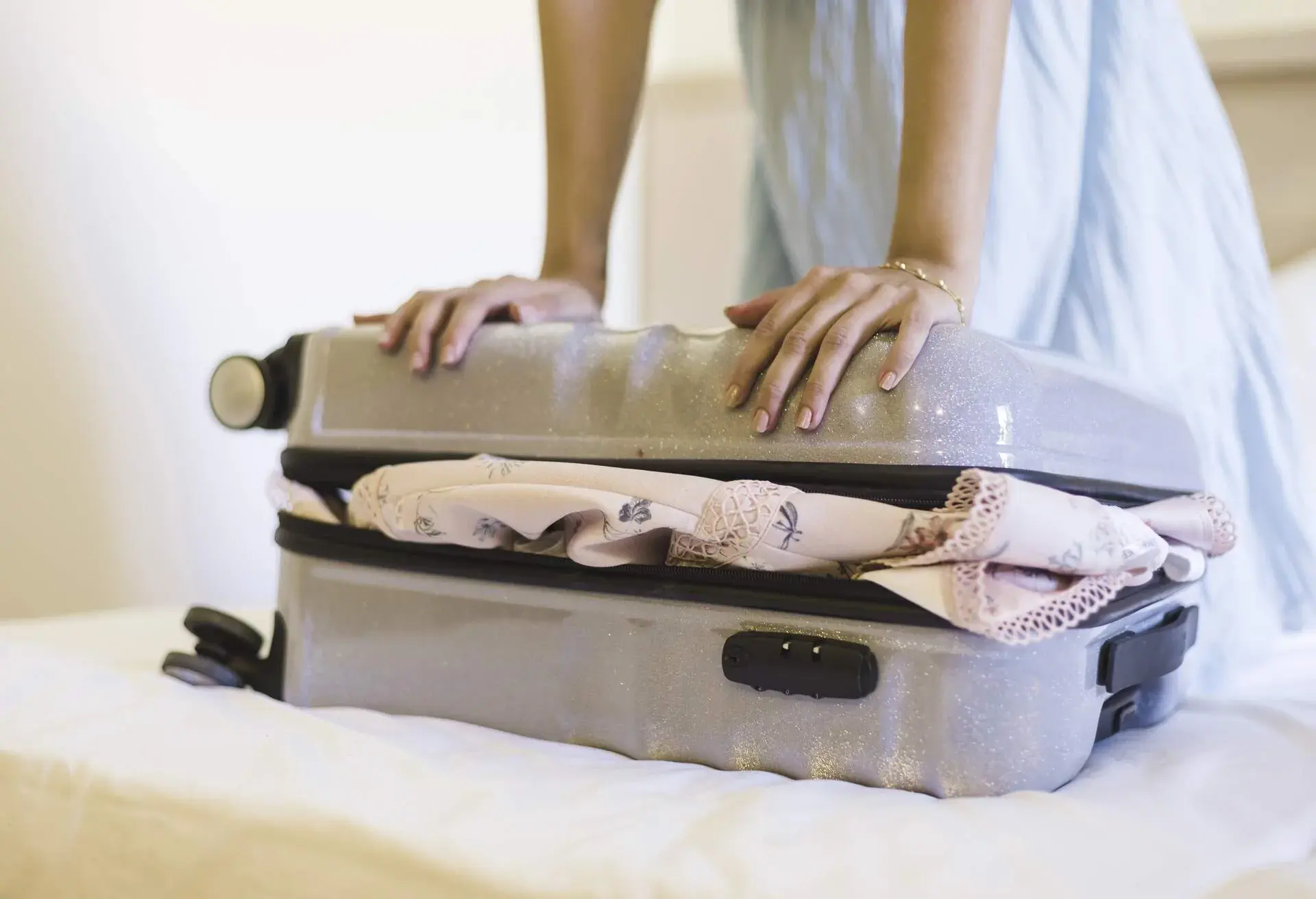
Packing light won’t make your seat any bigger, but it can make your trip easier. Traveling with only a carry-on means less time waiting at baggage claim and less risk of your luggage being delayed or lost.
One of the easiest ways to pack less is to build a capsule wardrobe around a single neutral color, such as black, navy or brown. Choose versatile pieces that work together, then add a few colors or accessories to mix things up. You may be surprised by how few clothes you actually need for your trip..
4. Bring snacks and stay hydrated.
When you’re crossing time zones, your flight attendants are usually syncing the meals with your destination, which means that you may get a meal when you’re not hungry and may be hungry for hours before the next meal arrives.
I usually bring a little something on a flight, like almonds or granola bars, in case the latter happens. (I also travel with someone who tends to get “hangry,” so throwing him some snacks is good for everyone.)
Although I love salty snacks like pretzels and chips, I try to stay away from them on long flights to avoid dehydration and swelling. I also try to make a point of taking some sips of water every hour.
5. Choose the right seat for comfort.
On wide-body planes, the economy seats with the most room are the bulkhead seats in the front of the cabin or the exit rows. If you’re tall, this is your best bet.
But keep in mind that the bulkhead wall is where the airlines put bassinets, so if you’re bothered by crying babies, this may not be for you. Also note that your seat’s TV will likely be stored in your armrest and that can feel awkward to some travelers. The catch-22 is that the farther up in front you sit, the quieter the actual airplane noise is since most plane engines are located under the wings.
If you don’t need the extra legroom, consider booking a seat toward the back. Most people don’t love the back row, which can be good news if your flight isn’t full. But try for a few rows up from the bathrooms.
6. Align your sleep with your destination.
If you’re going through several time zones, your body will take a hit. You can prepare for a trip by adjusting your sleep in advance by a bit or booking a flight that arrives during the day.
For those who can sleep on a plane, booking a redeye is a fine decision. The faster you’re able to adjust to your destination time zone, the better rested you’ll feel overall.
Here is how to beat jet lag before it begins with these small adjustments.
- Set your watch to the destination time at boarding
- Eat and sleep according to destination mealtimes during the flight
- Get daylight exposure soon after arrival to help your body adjust
7. Use noise-canceling headphones (or earplugs).
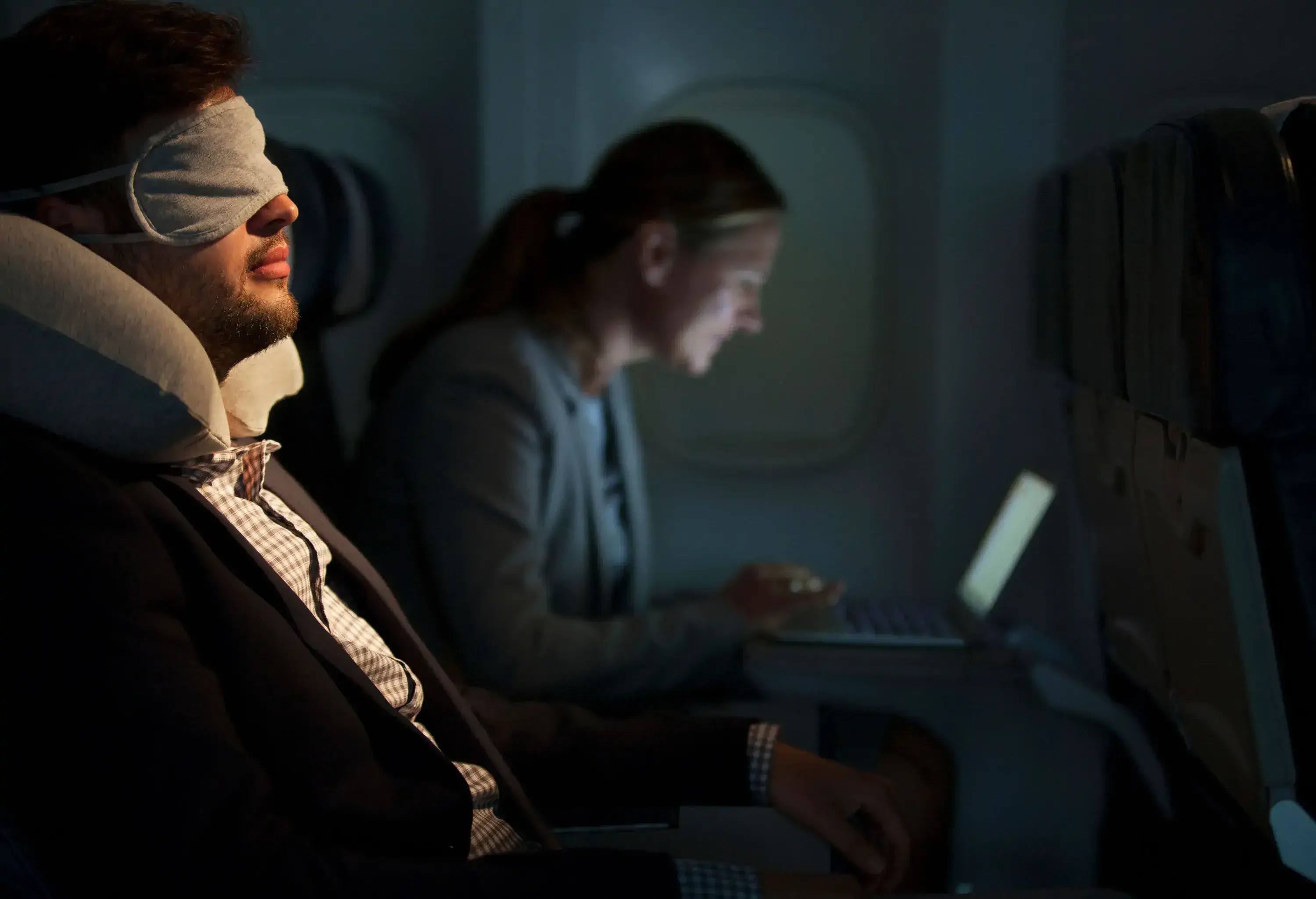
Noise-canceling headphones or earplugs are among the most useful items you can bring on a long flight. They help block out engine noise, conversations and other common cabin distractions, making it easier to relax, watch a movie or get some sleep.
If you plan to sleep during your flight, a good pair of headphones combined with an eye mask can make a noticeable difference to the quality of your rest.
8. Move every 90 minutes.
Sitting for long periods of time, dehydration, preexisting health conditions, cramped seating, and high altitudes aren’t the best for circulation. Even a quick walk to the galley can help reduce stiffness.
Get up every 90 minutes or so to walk the aisles, do ankle rolls, and stretch. As mentioned previously, consider compression socks if you are particularly concerned about your circulation or feet swelling.
Moving around is also just a generally good idea to pre-empt the aches and pains associated with sitting for a long time. Develop a little circuit of exercises or stretches to do on the plane.
Getting up and moving every 90 minutes helps is especially important for your energetic little ones. When flying with children, a few extra tricks also help make the journey even smoother:
- Pack plenty of snacks (low-sugar options to avoid crashes)
- Bring entertainment like coloring books or downloaded shows
- Include a small “surprise toy” for long stretches
Search flights by shortest duration or fewest layovers to make family travel easier on everyone.
9. Keep your devices charged.
If you’re bringing electronics on a long-haul flight, you’ll want to make sure they stay charged.
Most US carriers provide outlets and USB ports in premium cabins, and some larger planes have them in economy (or the first few rows of economy plus seats).
Still, it’s always a good idea to bring a portable charger for small devices just to be on the safe side.
Turning down the brightness and closing apps can also make your battery last longer.
10. Use KAYAK tools.
Some of the best ways to survive a long flight start before you board. A little planning can help you choose a more comfortable itinerary and stay on top of travel updates along the way.
When searching for flights on KAYAK, use filters to find options with Wi-Fi, fewer connections or departure times that better match your sleep schedule.
If you’re managing multiple bookings, Trips can help keep your itinerary organized in one place, while Flight Tracker makes it easy to stay informed about gate changes and delays.
Now, you have the tools to prepare for a long flight. There’s no need to worry about it. You can make a plan in your own image to deal smoothly with your long-haul flight. You might also be interested in our blog articles to survive a long flight, so take a look at things to do on a plane, tips for flying, and packing for holidays.
Long flights FAQs.
- Don’t drink alcohol or caffeine!
- Don’t sacrifice comfort for fashion (I’m looking at you, stiletto heels and miniskirts).
- Don’t forget to moisturize and drink plenty of water.
- Bring plenty of reading material, lots of work I need to do (or have been procrastinating), and download media for offline use.
- Bring a trusty scarf or blanket, large headphones or ear plugs.
- Bring a good portable charger.
- Pack some healthy snacks and buy a water bottle or two before boarding.